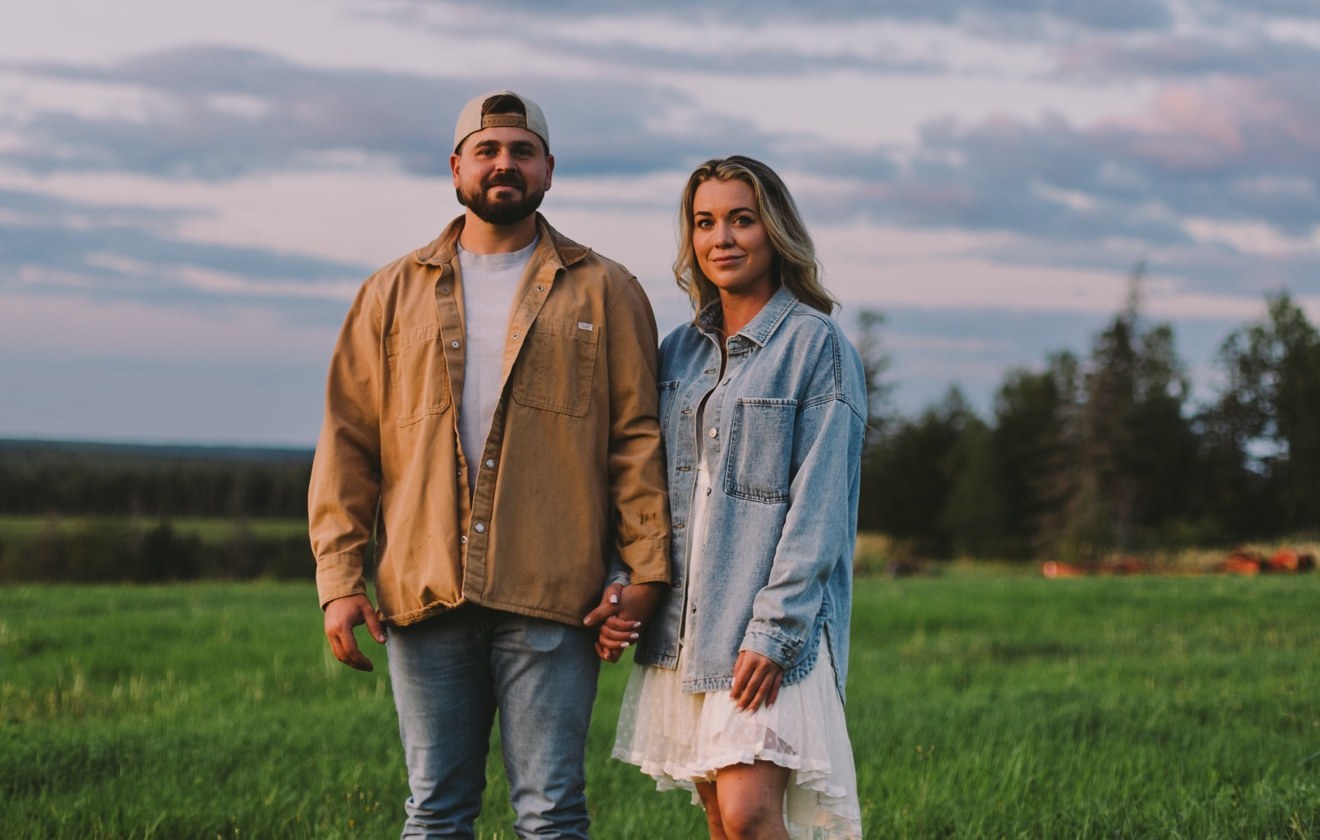
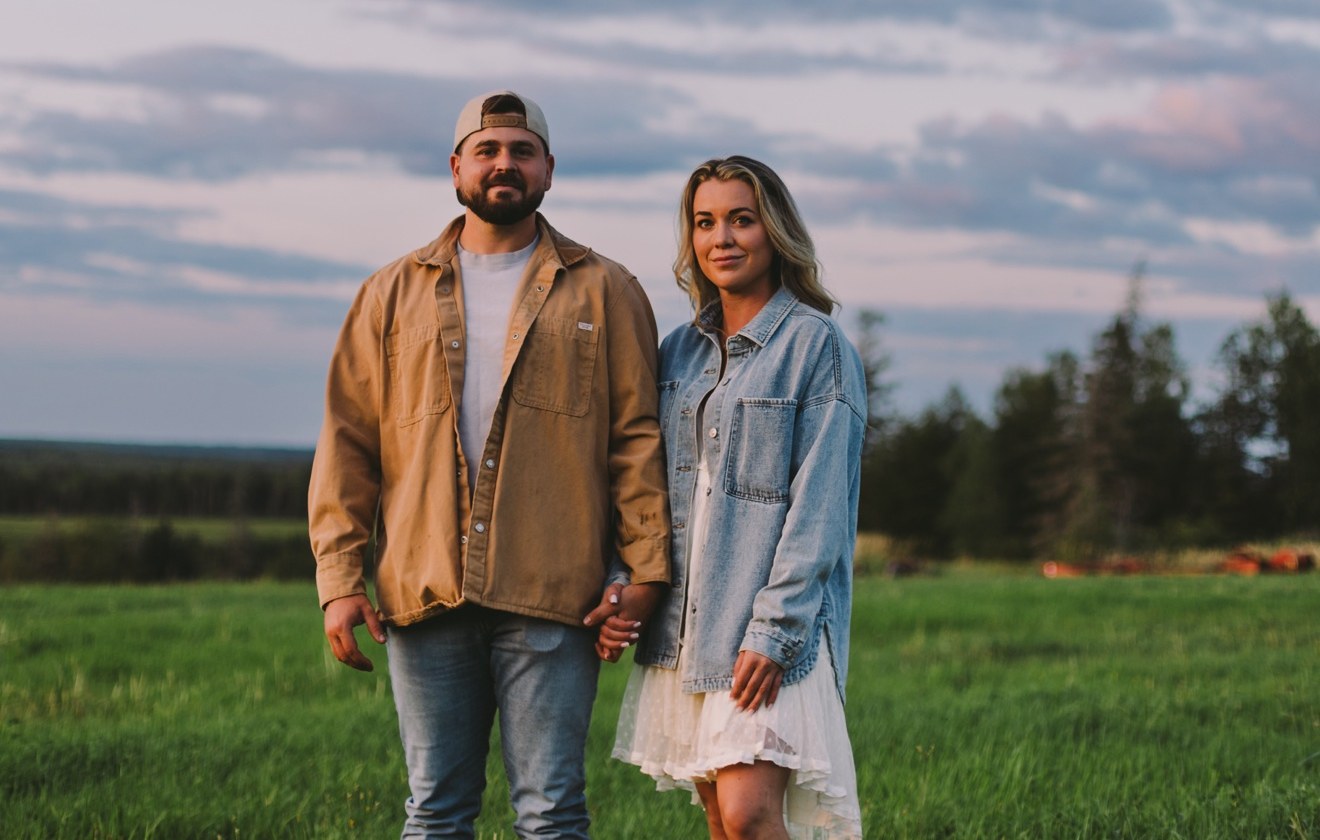
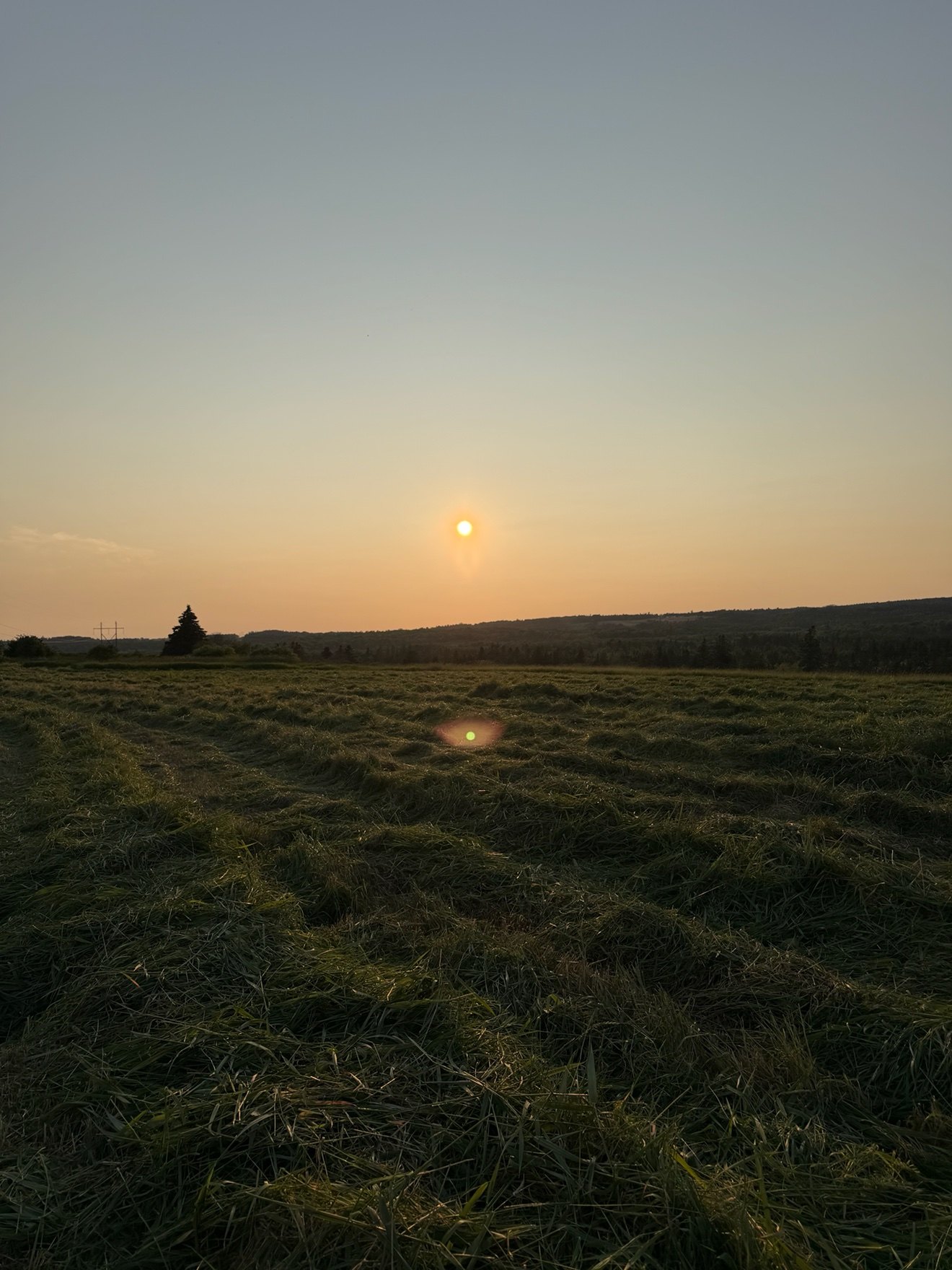
Marc-Antoine and Ashley standing hand in hand in a green field at Lavender Lamb Ranch at dusk
Salisbury, New Brunswick

A little farm, built with purpose.

We're a small, family-owned, provincially registered farm raising purebred Dorper sheep for meat production, alongside our free-range hens. Fresh eggs, colourful hatching eggs, and our first lambs expected in December 2026–January 2027.

5
breeds in the hen flock — Ameraucana, Polish, Easter Eggers, Ayam Cemani & ISA-Brown
$7
per carton of fresh farm eggs
$25
per dozen hatching eggs
Dorper
purebred flock raised for meat production

Tour the Ranch

See the property from above

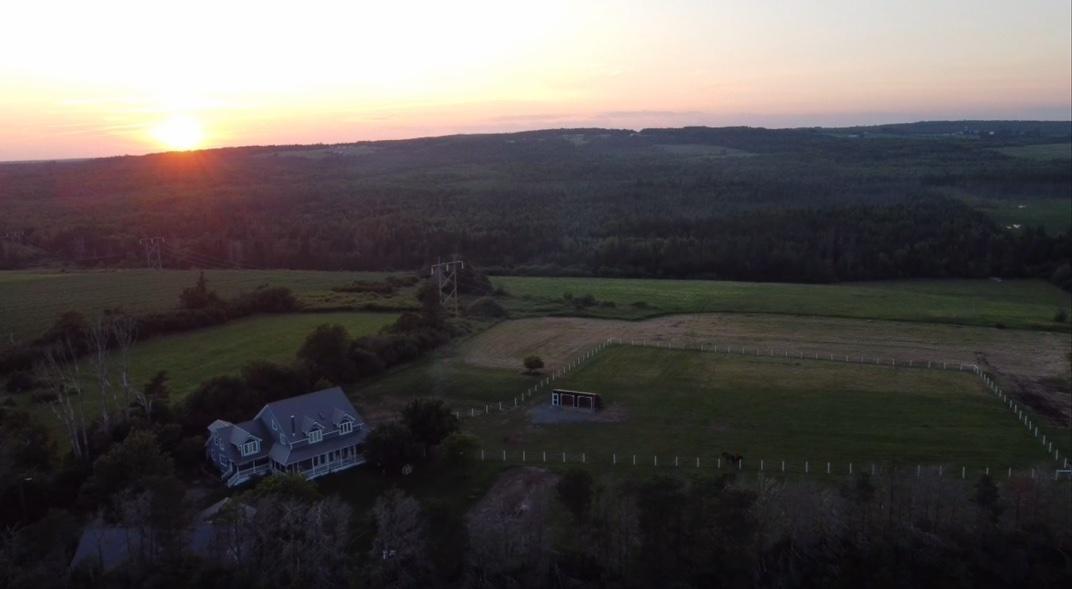
A one-minute drone flight over Lavender Lamb Ranch at sunset — the house, the fenced pastures, the sheep shelter, the horses and the barn, here in Salisbury.

Lavender Lamb Ranch logo — a black-headed Dorper lamb and a hen with lavender sprigs, above the words Lavender Lamb Ranch

Our Vision

Raising Dorper sheep for meat production

The heart of Lavender Lamb Ranch is our flock. Our vision is to raise purebred Dorper sheep for meat production — healthy animals, raised with care on pasture here in Salisbury, so New Brunswick families can enjoy high-quality lamb raised close to home.

Canada still imports much of the lamb it eats, mainly from Australia and New Zealand. We want to help change that, one flock at a time: tender, high-quality lamb from our pastures, not from the other side of the world. Alongside our hens and their fresh eggs, the Dorper flock is the future we're building toward.

Lambing news

Our ewes are expecting

Our ewes are pregnant, and our first lambs are expected in December 2026–January 2027. We're growing the flock gradually, so we're not taking requests for lambs yet — these first lambs will stay here and help the flock grow. Follow along on Facebook for lambing-season updates.

From the Farm

Eggs today, lamb tomorrow

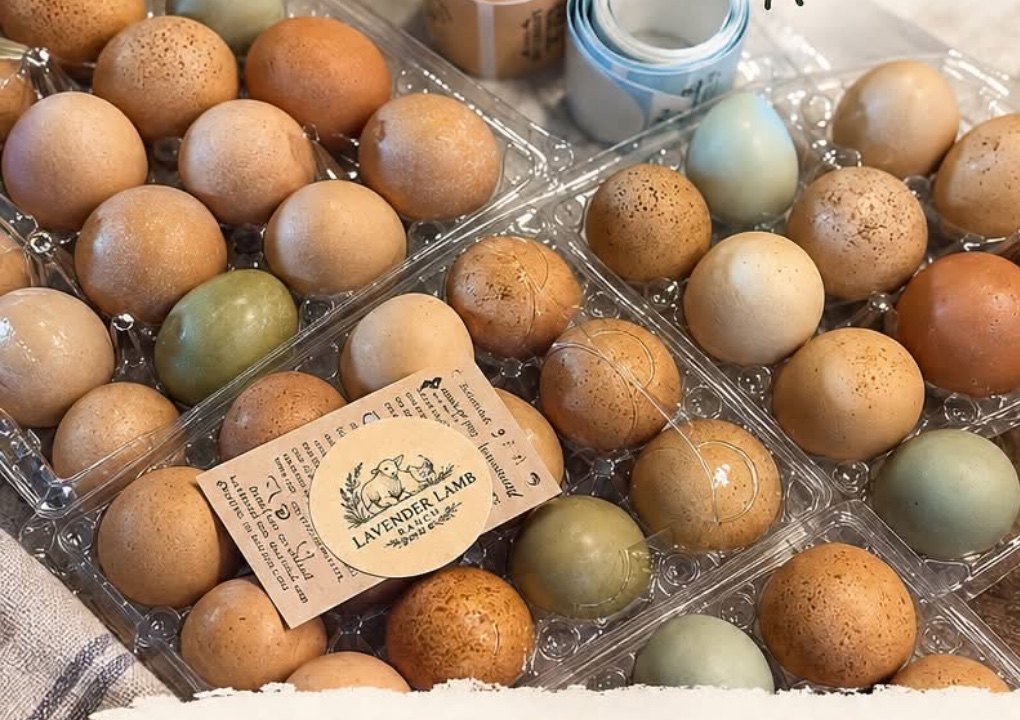
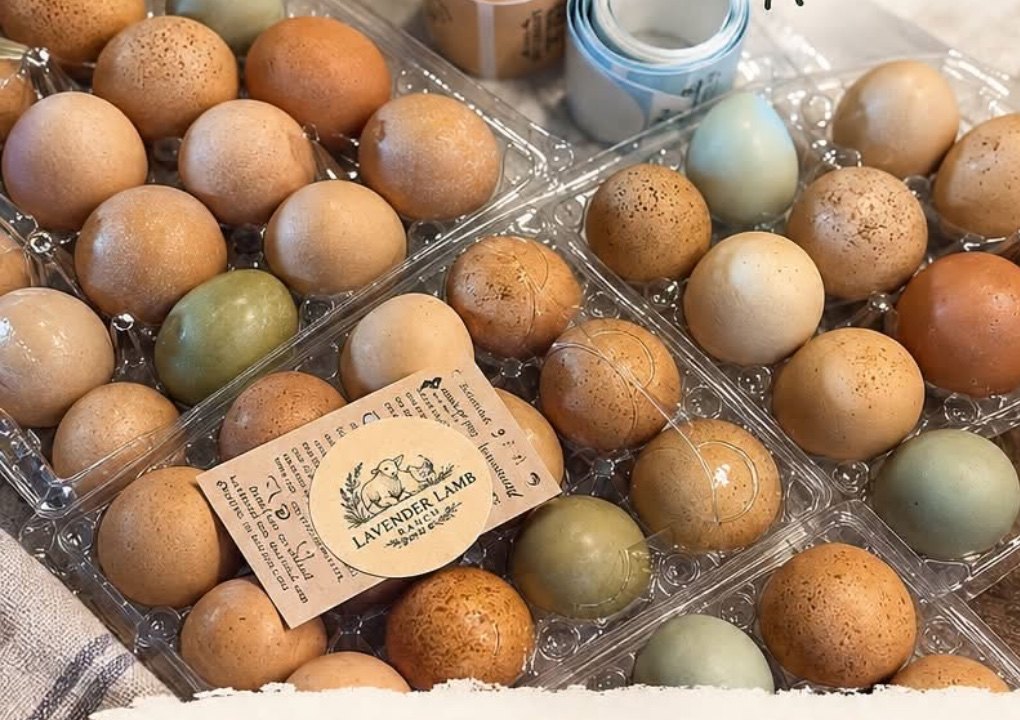
Our free-range hens are a colourful crew — Ameraucanas, Polish, Easter Eggers, Ayam Cemani and ISA-Browns — laying beautiful eggs in shades of brown, blue, green and speckled, so every carton is a little different. Pickup is at the ranch; send an e-transfer to reserve yours.

Cartons of colourful fresh farm eggs — brown, speckled, blue and green — at Lavender Lamb Ranch
Available now

Fresh Farm Eggs

$7 per carton

A colourful assortment of farm-fresh eggs, perfect for breakfast, baking, or adding a little colour to your kitchen.

  • Laid by our free-range Ameraucana, Polish, Easter Egger, Ayam Cemani & ISA-Brown hens
  • Speckled, blue and green eggs in the mix
  • Pickup at Lavender Lamb Ranch
  • E-transfer to reserve your carton
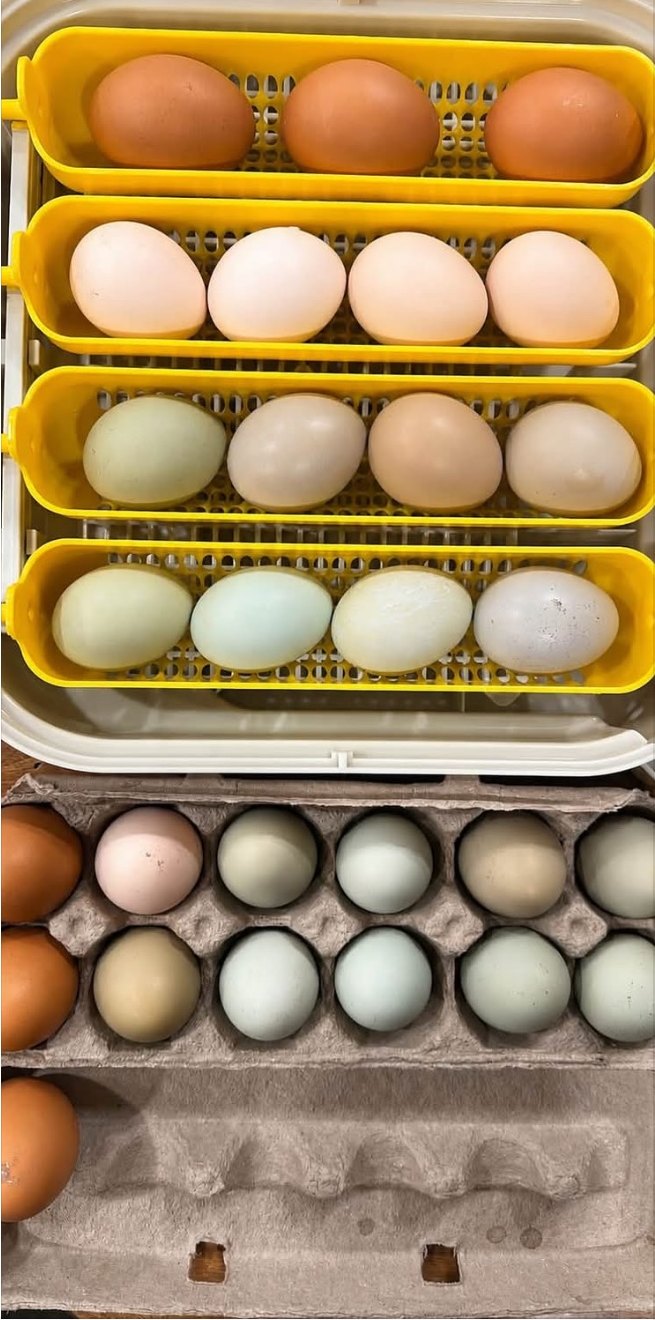
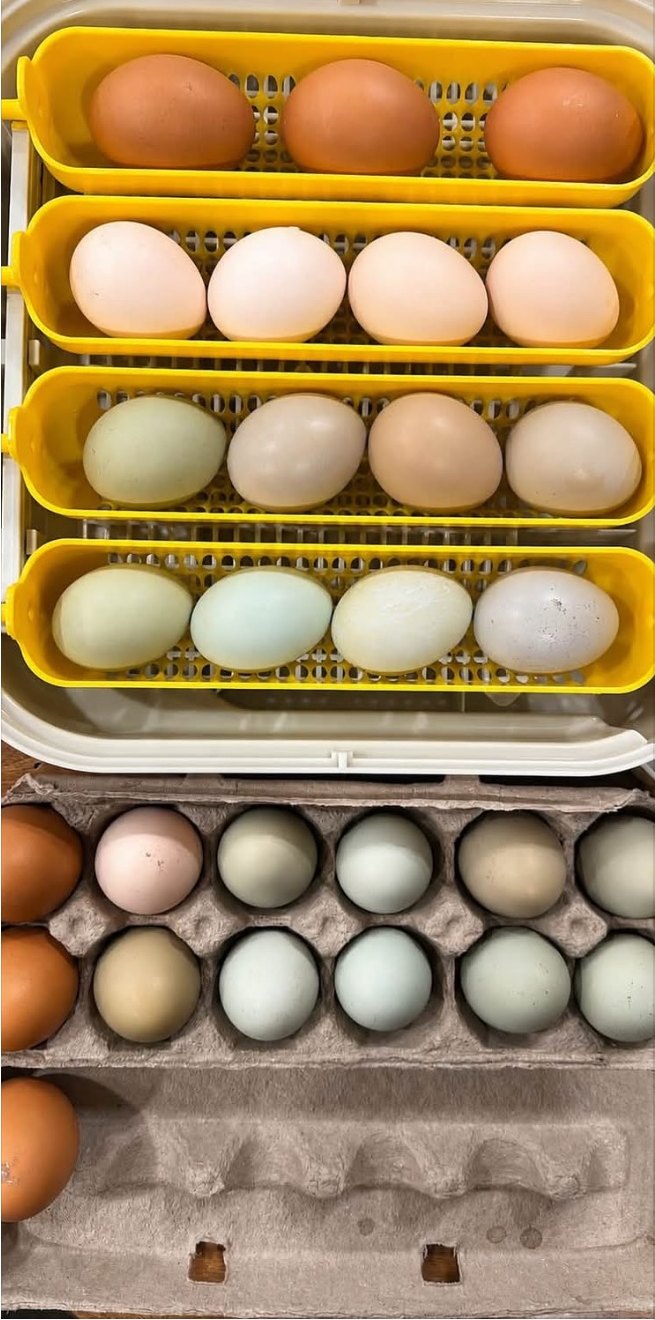
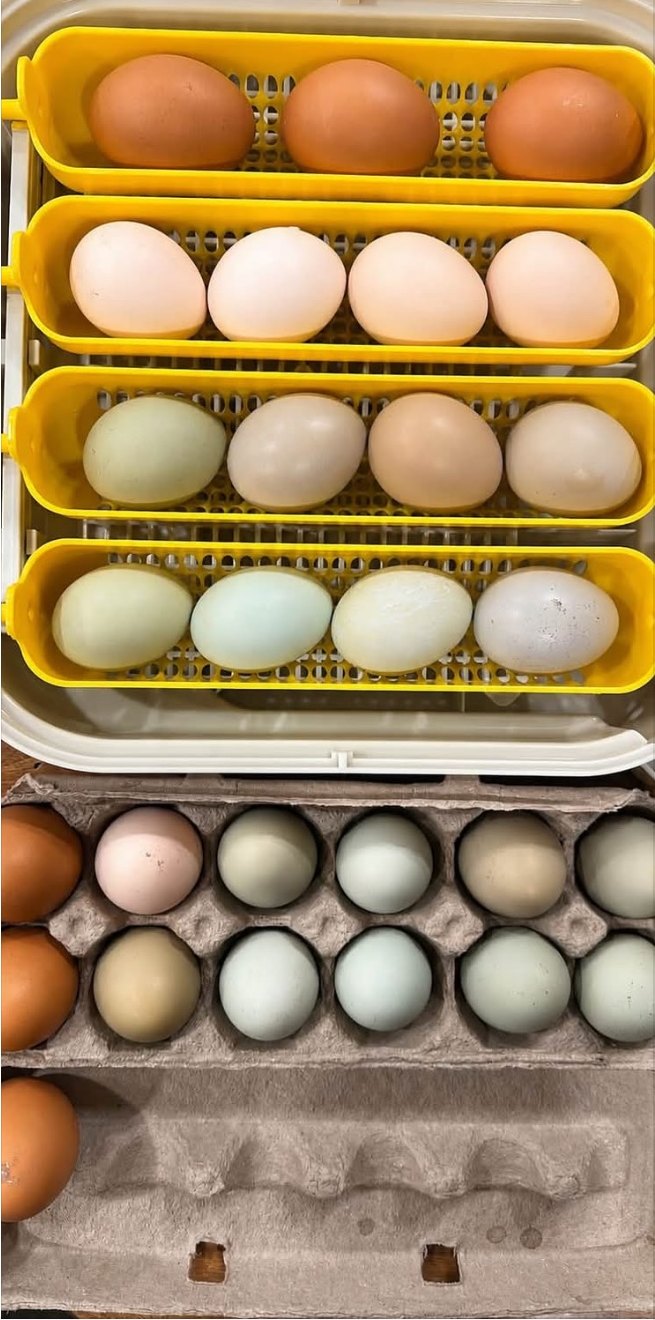
Colourful hatching eggs — brown, pinkish, blue and olive — sorted in incubator trays and a carton
Available now

Hatching Eggs

$25 per dozen

Hatching eggs from our colourful flock — perfect for adding colourful egg layers to your own flock.

  • Pinkish/beige, blue, aqua and olive eggs
  • From our Ameraucana, Polish, Easter Egger, Ayam Cemani & ISA-Brown flock
  • Message us to reserve your dozen
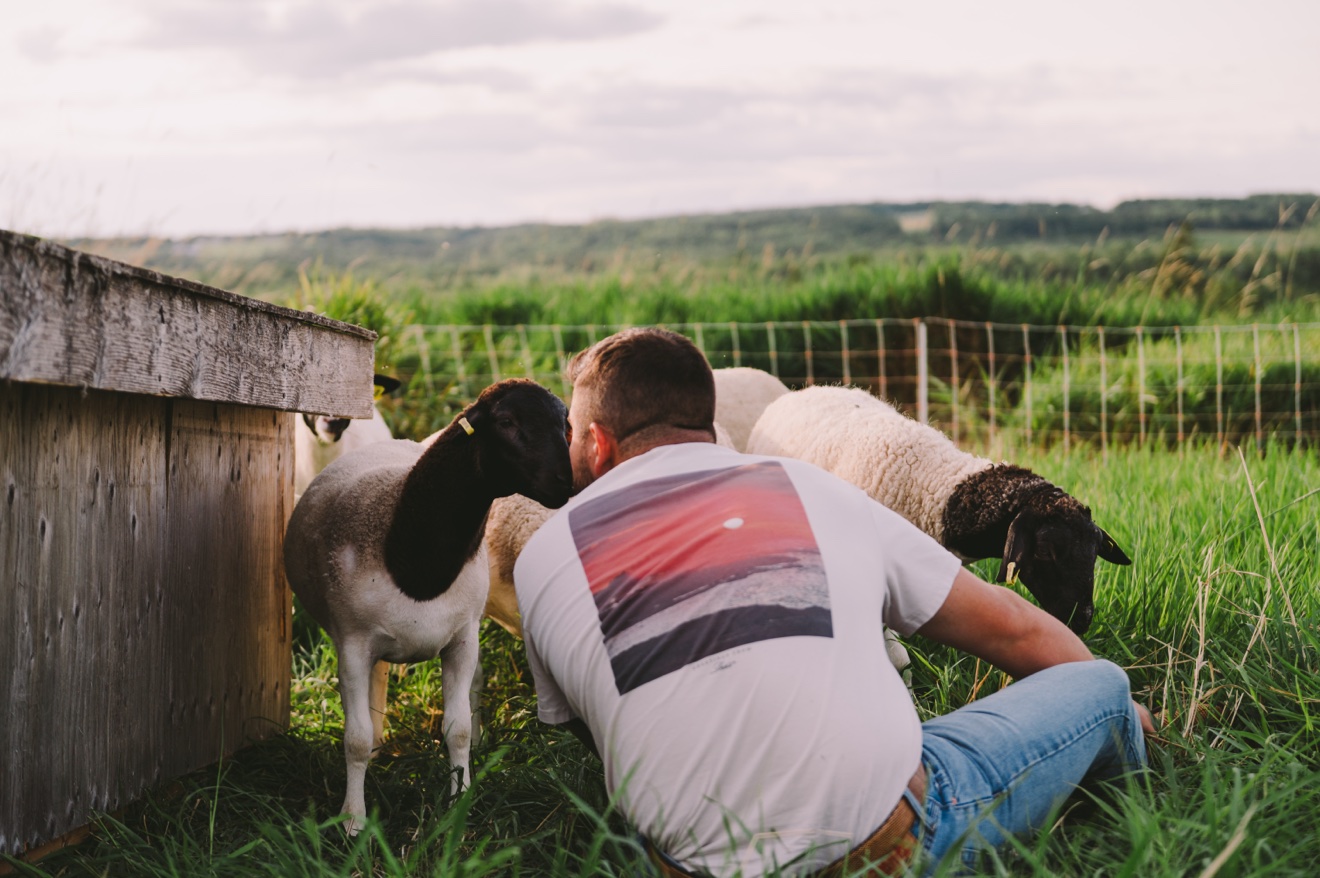
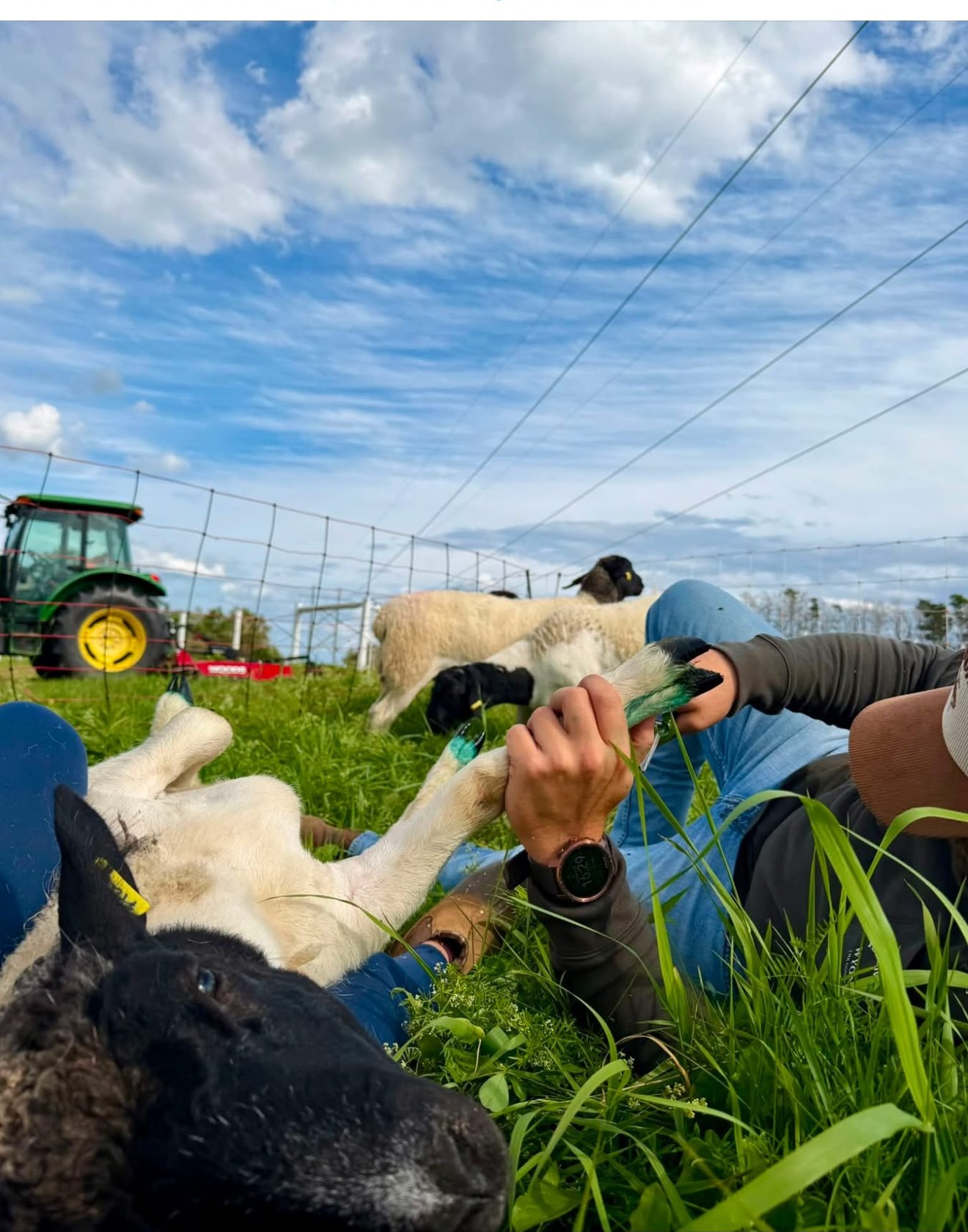
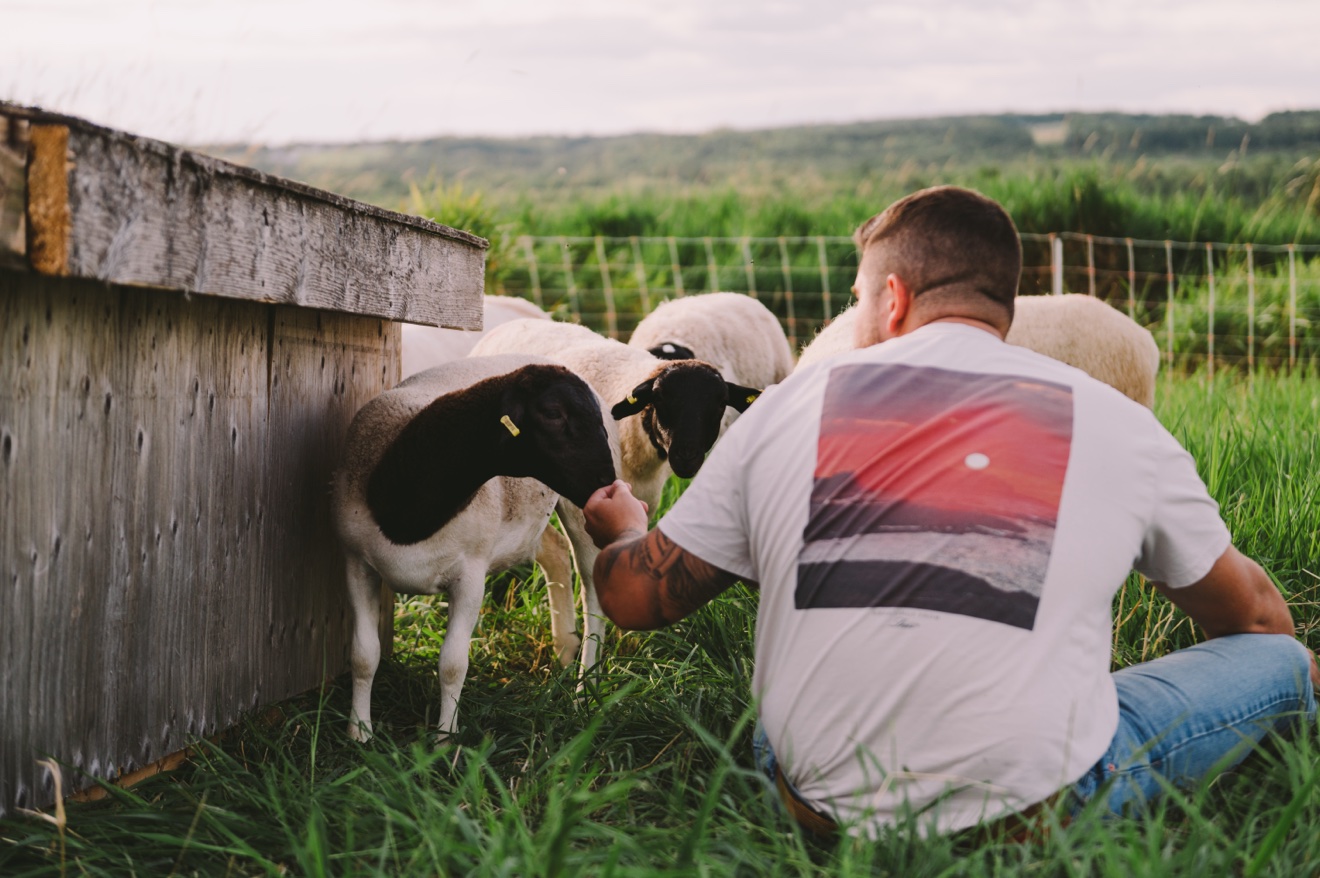
Marc-Antoine kneeling in the pasture as a young Dorper sheep nuzzles his face, the flock grazing beside the shelter
Growing gradually

Purebred Dorper Sheep

Raised for meat production

Our purebred Dorper flock is here, and we're growing it gradually — until it's big enough to produce a good amount of lambs each year. We're not taking requests for lamb yet, but you can meet the flock and follow their progress.

  • Our ewes are pregnant — first lambs expected December 2026–January 2027
  • Growing gradually toward a good number of lambs per year
  • Not taking lamb requests yet

Fresh eggs, straight from the ranch

Reserve a carton for pickup in Salisbury — here's how ordering works, and how to find us.

Who Are We

The family behind the ranch

Lavender Lamb Ranch is Marc-Antoine, Ashley and their son Dallas — a family building a farm with purpose in Salisbury, New Brunswick, with a flock of Dorper sheep, a colourful crew of hens, three horses, and two guardian dogs watching over the flock: Bo-Peep and Sully.

Our Story

It all started with Dallas

If someone had asked us a few years ago where we saw ourselves in the future, we probably never would have answered, “On a farm.” Yet that's exactly where life has led us.

The day Dallas was born, everything changed. We wanted him to grow up with room to run, build forts in the woods, explore nature, care for animals, and learn the values that everyday farm life teaches best — responsibility, patience, respect, and hard work. Animals depend on us every single day, rain or shine.

When Ashley joined this adventure, the vision became a shared dream. We didn't simply want to buy a house in the country — we wanted to build a life with purpose. Then we discovered that Canada still imports much of the lamb it eats, mainly from Australia and New Zealand, while demand keeps growing and there aren't enough sheep producers to meet it — especially here in New Brunswick.

“We looked at each other and asked — why not us?”
— Marc-Antoine & Ashley, Lavender Lamb Ranch
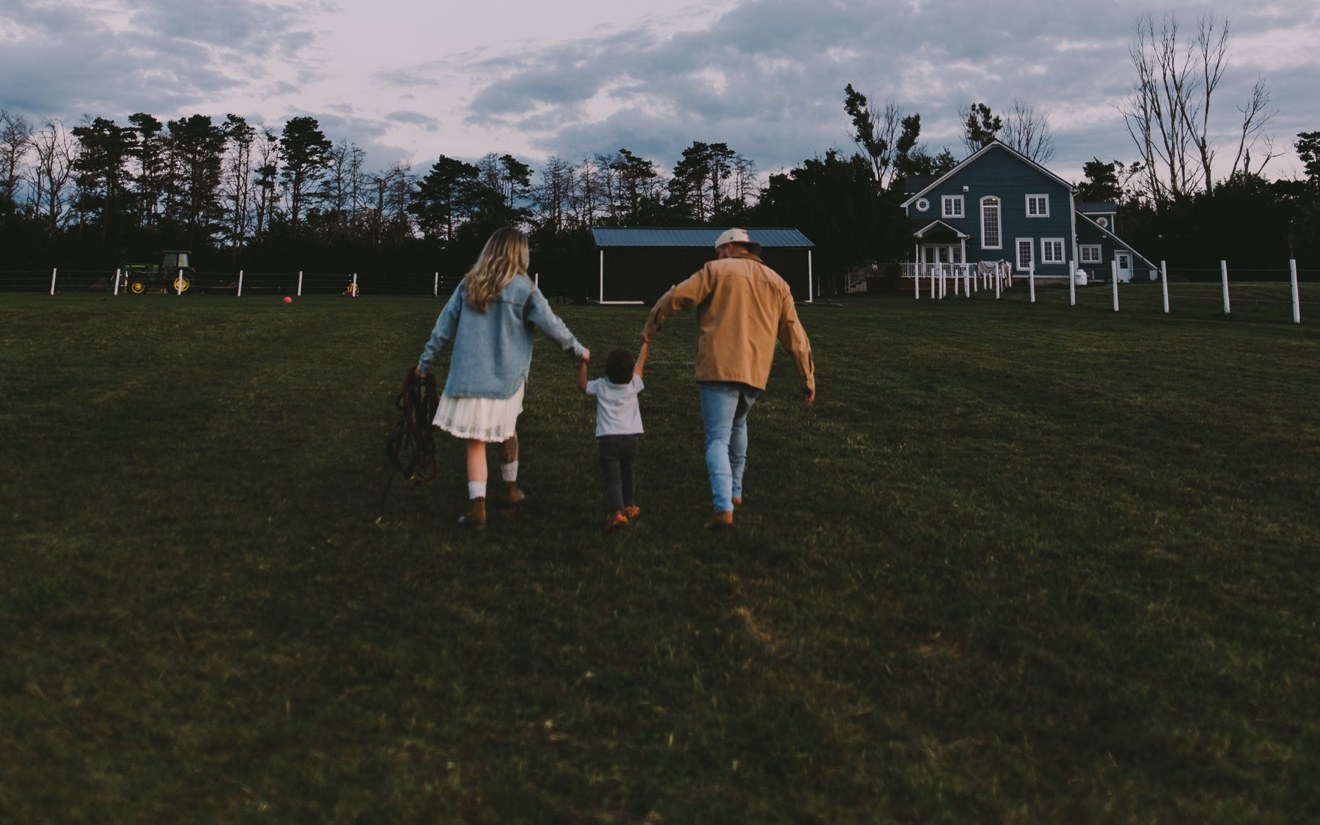
Marc-Antoine, Ashley and Dallas walking hand in hand across the pasture toward the farmhouse at dusk
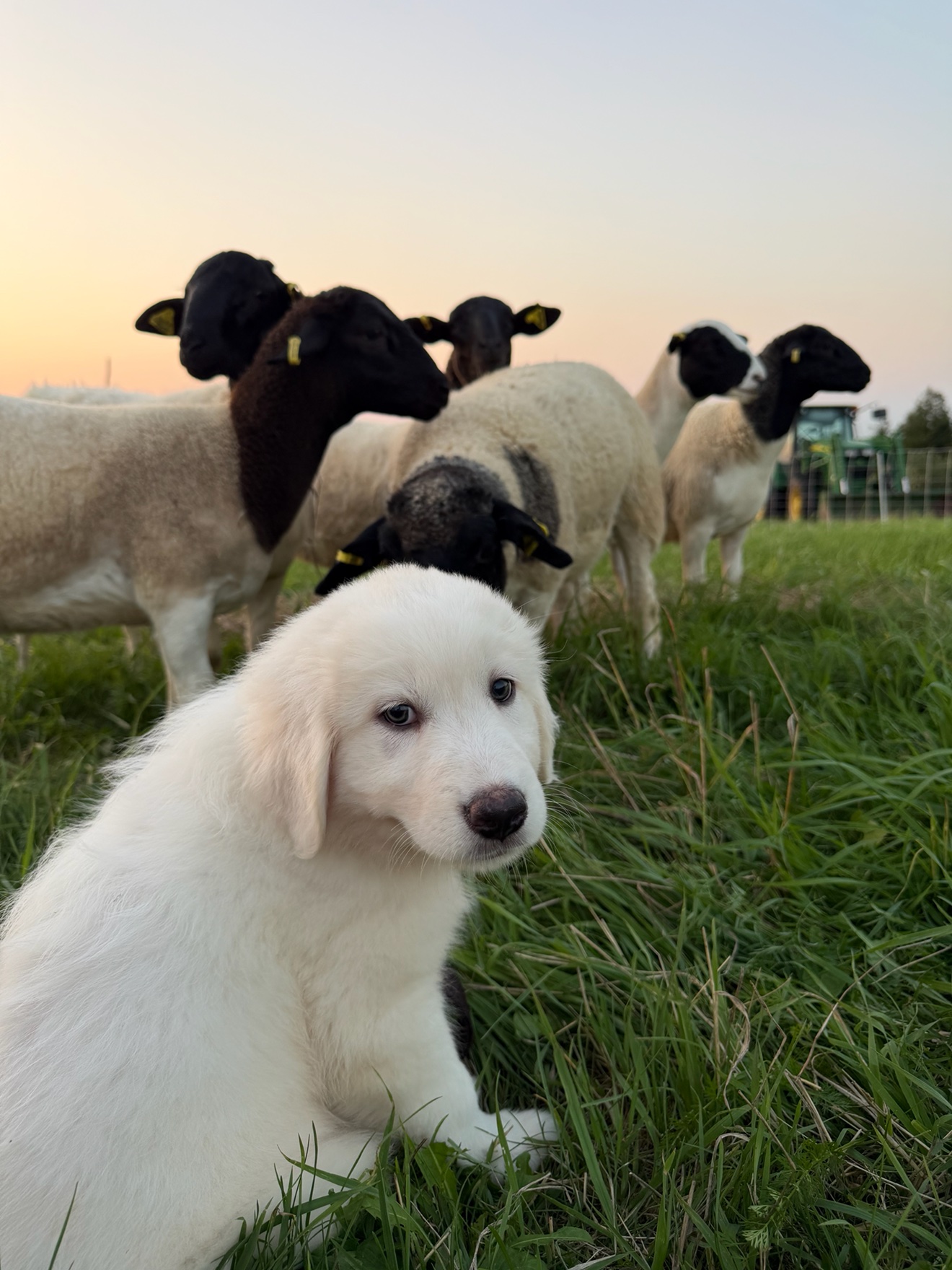
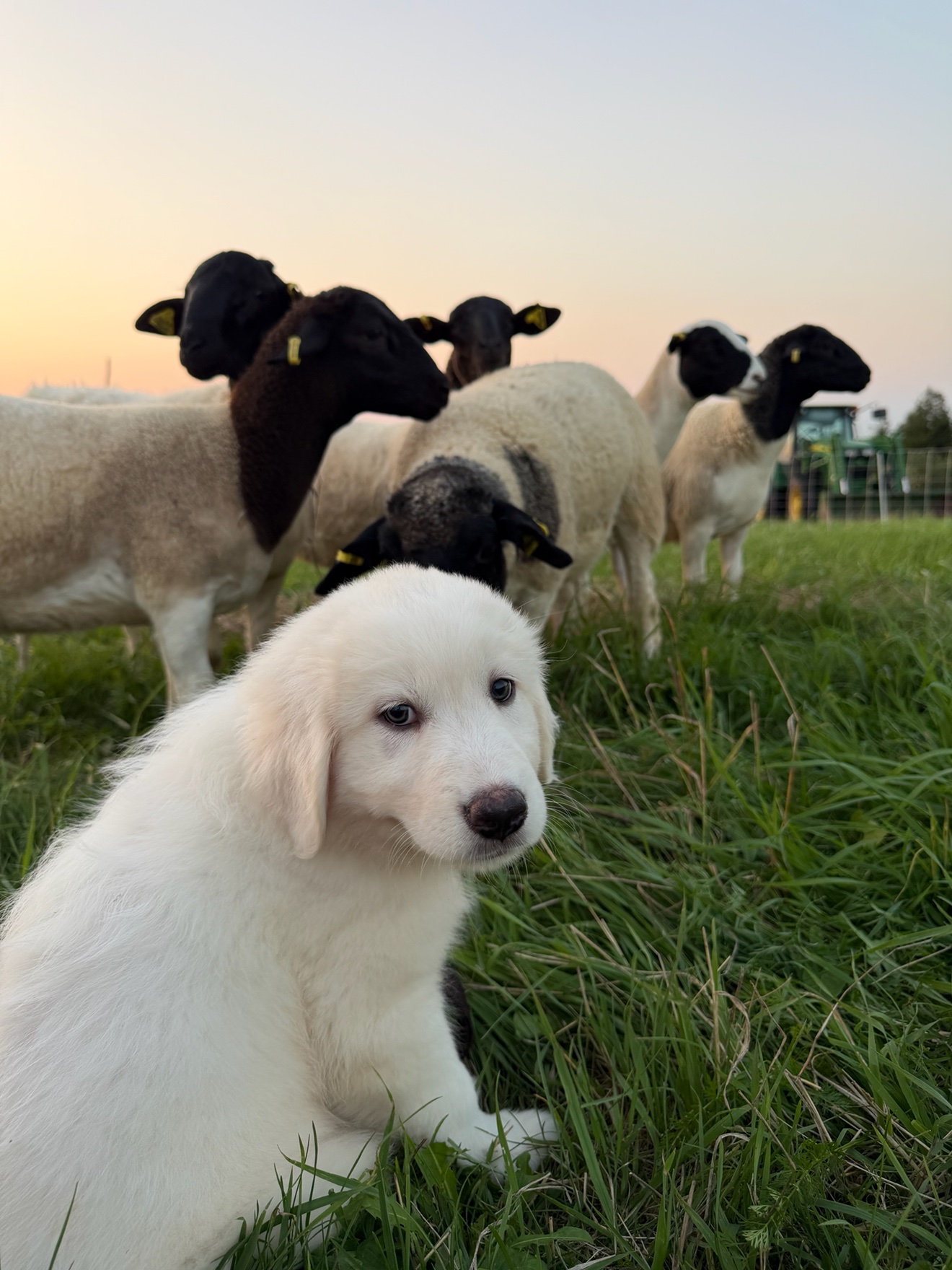
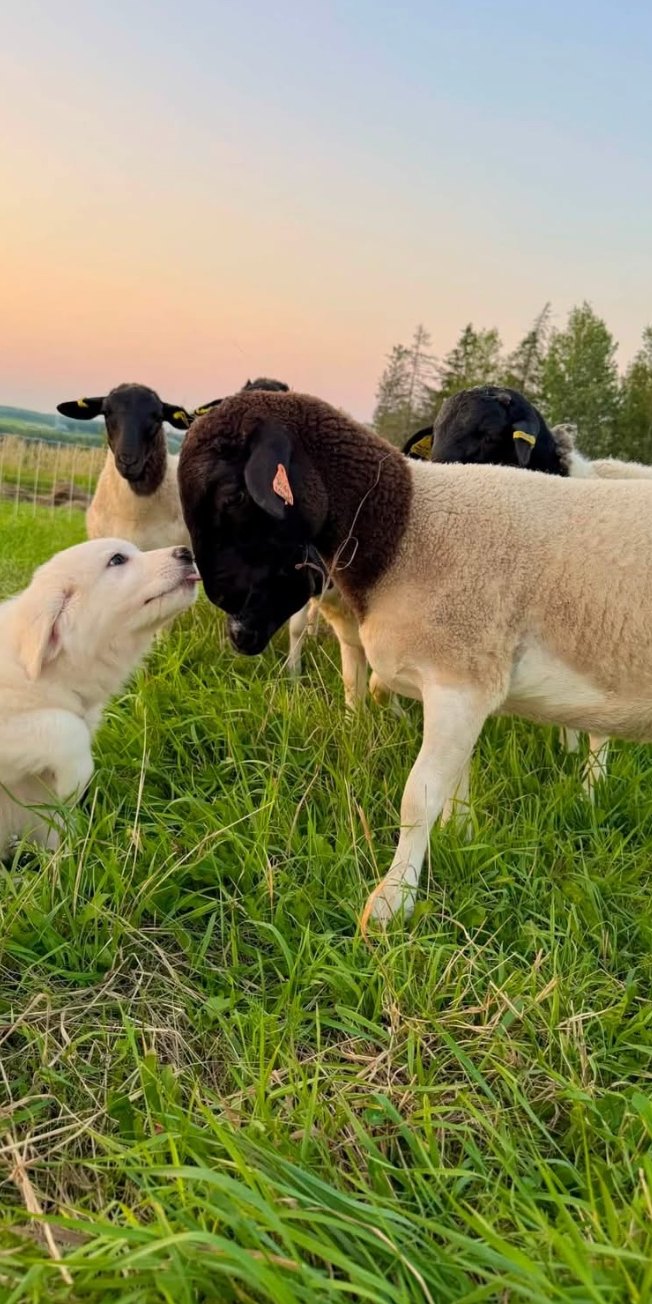
Bo-Peep, a white Great Pyrenees × Maremma puppy, sitting in the pasture with the Dorper flock behind her at sunset

Meet the Guardians

Bo-Peep & Sully

Two dogs watch over our Dorper flock. Bo-Peep is our Great Pyrenees × Maremma Sheepdog puppy, growing into her role as guardian. Sully is our 3-year-old Great Pyrenees × Bernese Mountain Dog — already a full-grown guardian on duty alongside her.

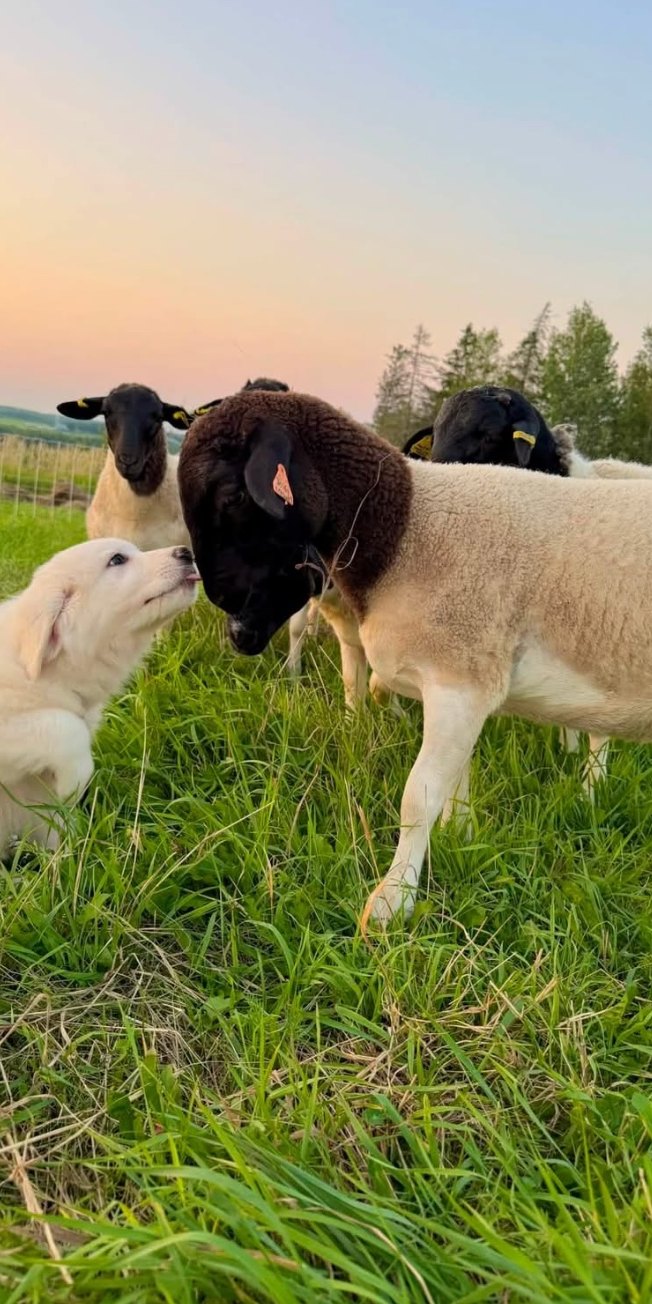
Livestock guardian dogs have protected sheep for thousands of years, living alongside their flock and watching over them from predators such as coyotes, foxes, and stray dogs. Even as a puppy, Bo-Peep is naturally calm and gentle, and she's already bonding with our sheep — carefully introducing herself, and even getting sweet nose kisses in return. The photo here is Bo-Peep with the flock behind her at sunset.

Unlike herding dogs, guardian dogs don't chase sheep — they stay with them, build trust, and protect them day and night. As Bo-Peep grows, she'll learn from Sully and from the flock itself that the sheep are her family. We can't wait to watch them become the loyal guardians our flock deserves.

Animal welfare first

Good farming starts with animal welfare. Every animal here is fed, watered, and cared for properly — every single day, rain or shine.

Clean, healthy environments

We take pride in a clean, healthy environment where our hens can thrive and lay naturally, and our sheep can grow strong on pasture.

A commitment to quality

We're learning every day, making mistakes, and celebrating small victories — building, little by little, something we're proud to share with our community.

The Rest of the Ranch

Horses, hay & daily life

Sheep and hens are the heart of the ranch, but they're not the whole story. There's always hay to make, fences to check, and three horses keeping an eye on it all.

Our three horses

The ranch is also home to three horses — Mick, Velvet and Pepper — part of the family, and part of daily life on the farm, from morning feedings to evenings in the pasture.

Hay from our own fields

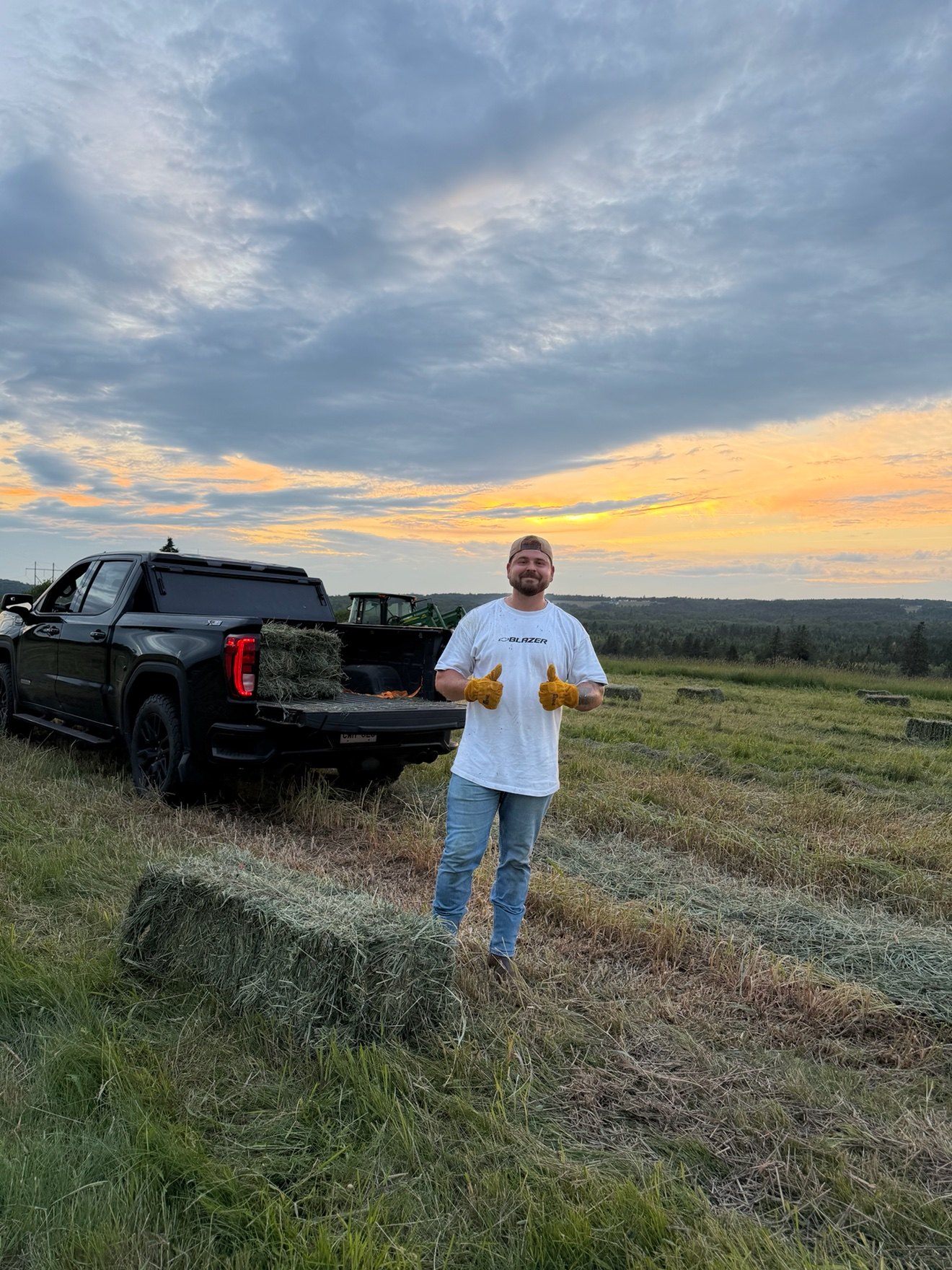
We make our own hay — cut and baled right here on the ranch with our old equipment: a Gehl 2170 hay mower, a Massey Ferguson #10 baler and our John Deere 5085E tractor. It keeps the flock fed all through the New Brunswick winter.

The Sheep

Our Dorper flock

Purebred Dorper sheep raised on pasture for meat production — the heart of Lavender Lamb Ranch, and a flock we're growing gradually, one lambing season at a time.

Flock status

Growing gradually — not taking lamb requests yet

Our aim is to grow the flock gradually until we're producing a good amount of lambs each year. Our ewes are pregnant now, with our first lambs expected in December 2026–January 2027 — and those first lambs will stay here to help the flock grow. So for now, we're not taking any requests for lambs. Follow our Facebook page to watch the flock grow, season by season.

Why Dorper?

The breed that kept standing out

After weeks of research, one breed kept standing out. Sheep are well suited to a family farm — easier to manage than cattle, and even a young child can be involved from the very beginning. The Dorper was, for us, the obvious choice — and raising Dorpers for meat production is the vision at the heart of this ranch.

HardyBuilt to thrive in Canadian seasons.
Calm & easy to handleA gentle temperament the whole family can work with.
Thrives on pastureRaised on grass, the way it should be.
Naturally sheds its woolLess shearing, less stress — for sheep and farmers.
Outstanding mothersStrong maternal instincts for healthy lambs.
High-quality lambKnown worldwide for tender lamb with an excellent meat yield.
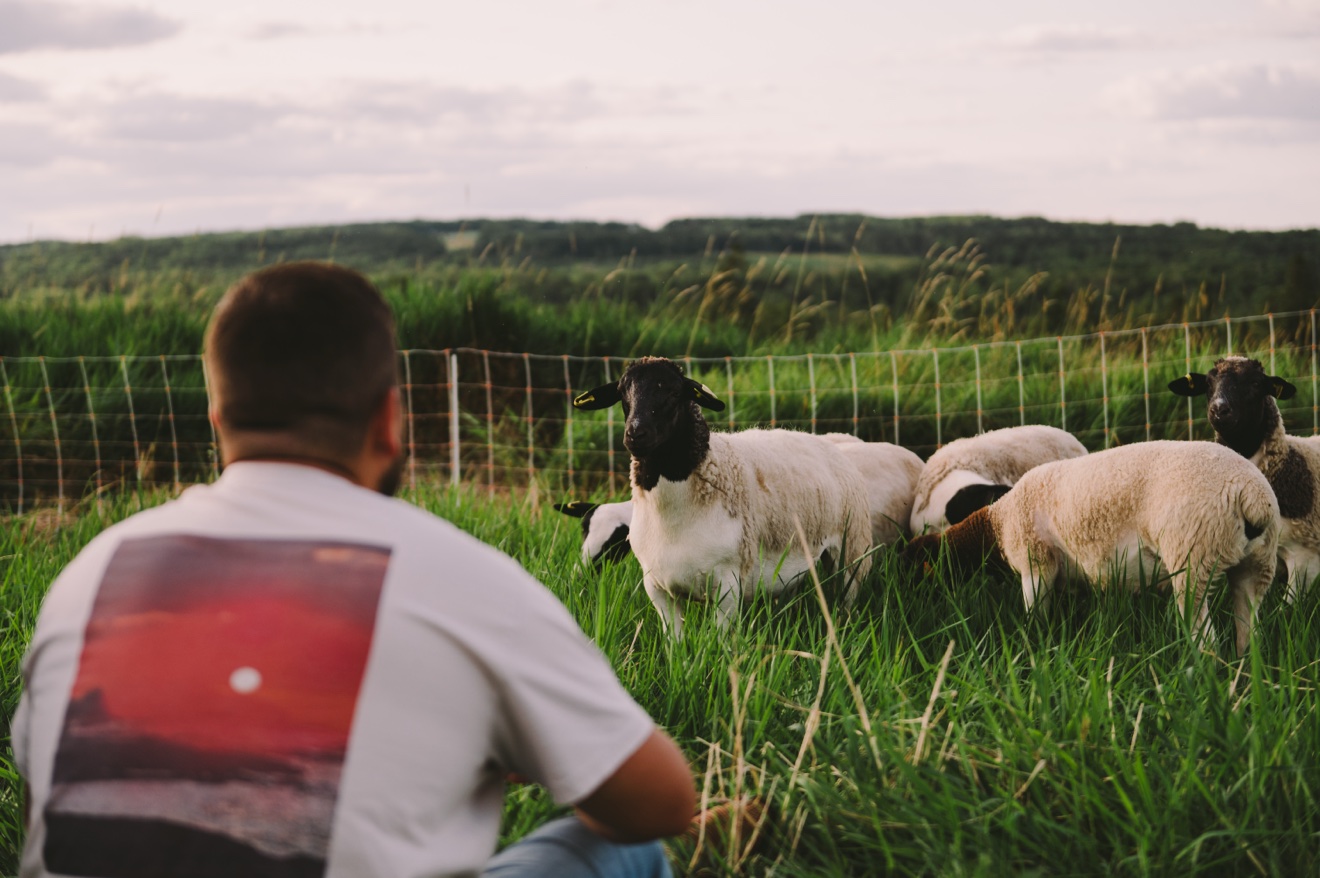
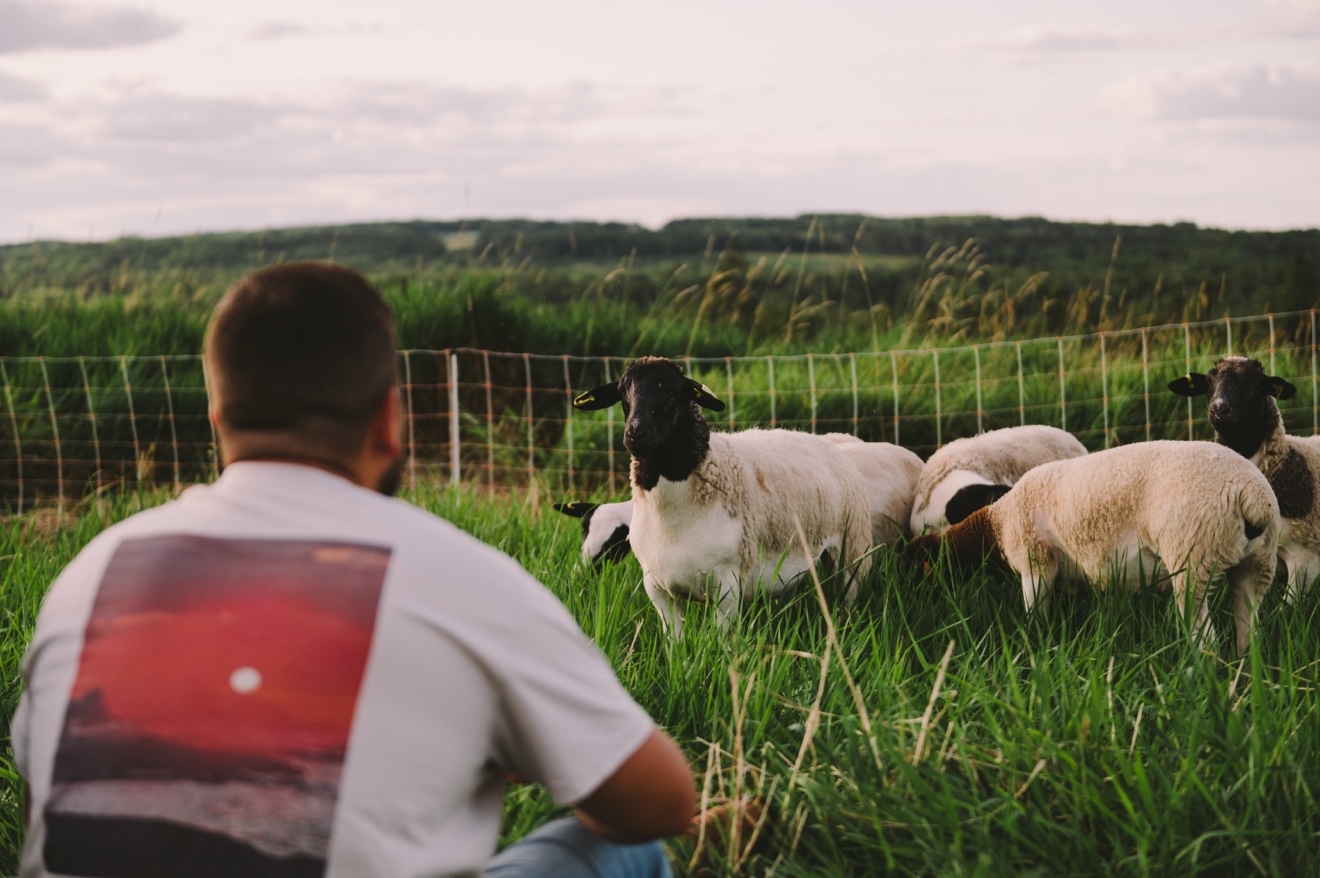
The Dorper flock looking toward the camera in tall pasture grass, Marc-Antoine sitting with them in the foreground

Meet the Flock

Names, faces & lambing records

Every sheep at Lavender Lamb Ranch has a name and a story. As we photograph each member of the flock, their profile will appear here — their photo, their name, and their lambing record — so you can follow each ewe's journey, season after season.

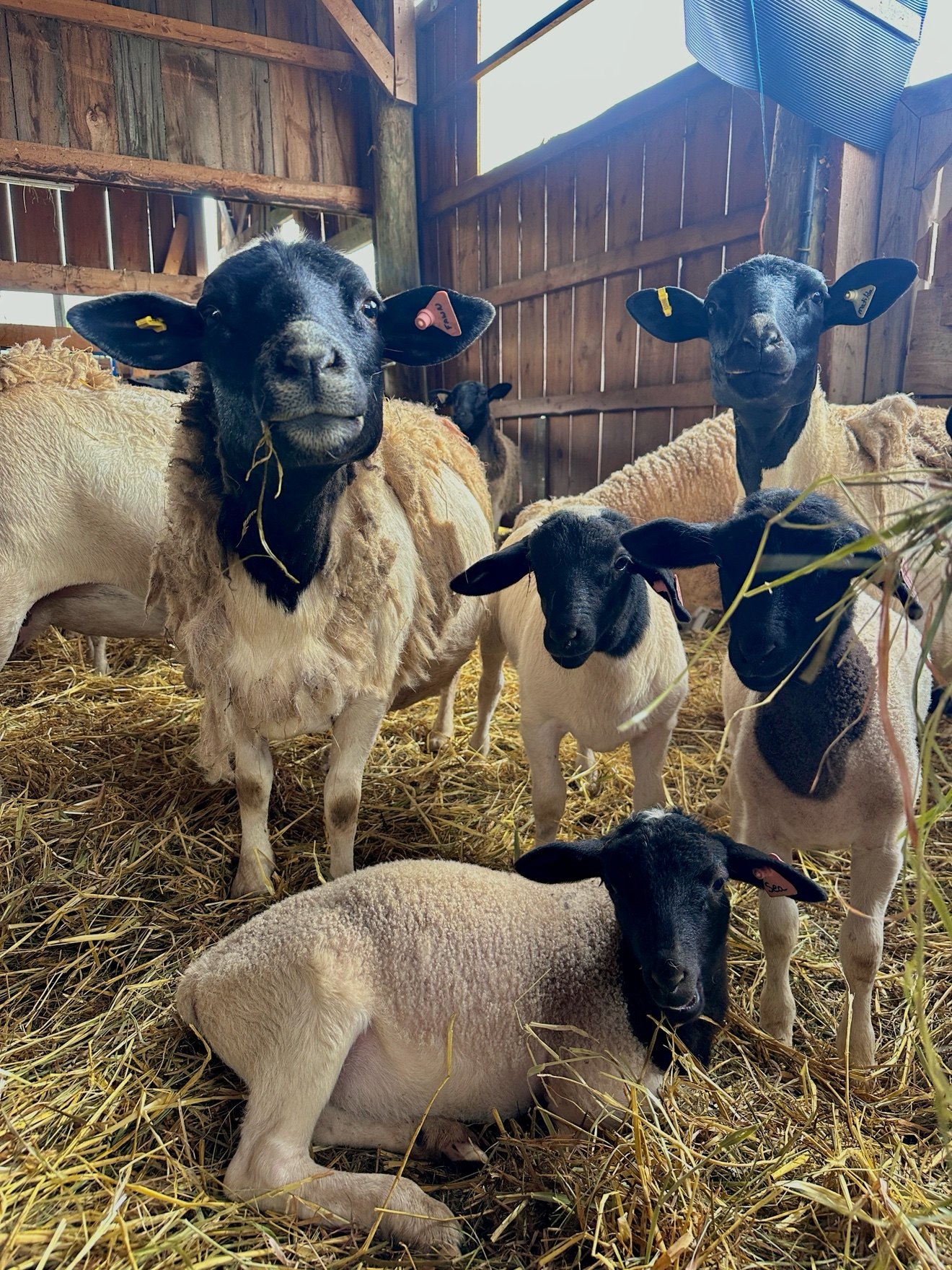
Dorper ewes and young lambs in the barn looking straight at the camera over fresh straw
Breeding flock

The ewes

BreedPurebred Dorper
StatusPregnant — first lambs expected December 2026–January 2027
ProfilesIndividual photos, names & lambing records are on the way, as we photograph each ewe
Bo-Peep the guardian puppy nose to nose with a black-headed Dorper sheep at sunset
Flock guardian

Bo-Peep

BreedGreat Pyrenees × Maremma Sheepdog
RoleLivestock guardian, in training
RecordBonding with the flock — already trading nose kisses, on duty day & night
Flock guardian

Sully

Sully is the second dog guarding our Dorper flock, on duty alongside Bo-Peep. At 3 years old, Sully is a full-grown livestock guardian — a Great Pyrenees mixed with Bernese Mountain Dog.

BreedGreat Pyrenees × Bernese Mountain Dog
Age3 years old
RoleLivestock guardian, on duty with Bo-Peep

Our Markets

Where our lamb will go

We're diversifying from the start. As the flock grows to a size that can supply steady numbers, we plan to sell our lamb through several channels — so a good local lamb doesn't depend on a single buyer:

Abattoir

Selling lambs through an abattoir as our numbers grow — a reliable channel for a growing flock.

Local butchers

Partnering with local butcher shops that want New Brunswick-raised lamb on their counters.

Restaurants

Chefs proudly serving lamb raised a few kilometres away, instead of imported from the other side of the world.

Direct to consumer

Families buying lamb straight from the ranch — the shortest trip from our pasture to your table.

The Evolution of the Farm

The work we put in

Nothing here happened overnight. These are our own photos — the land as we found it, the dirt and the grading, the fences going up, and the pastures our animals graze today. This is what building a farm from the ground up actually looks like.

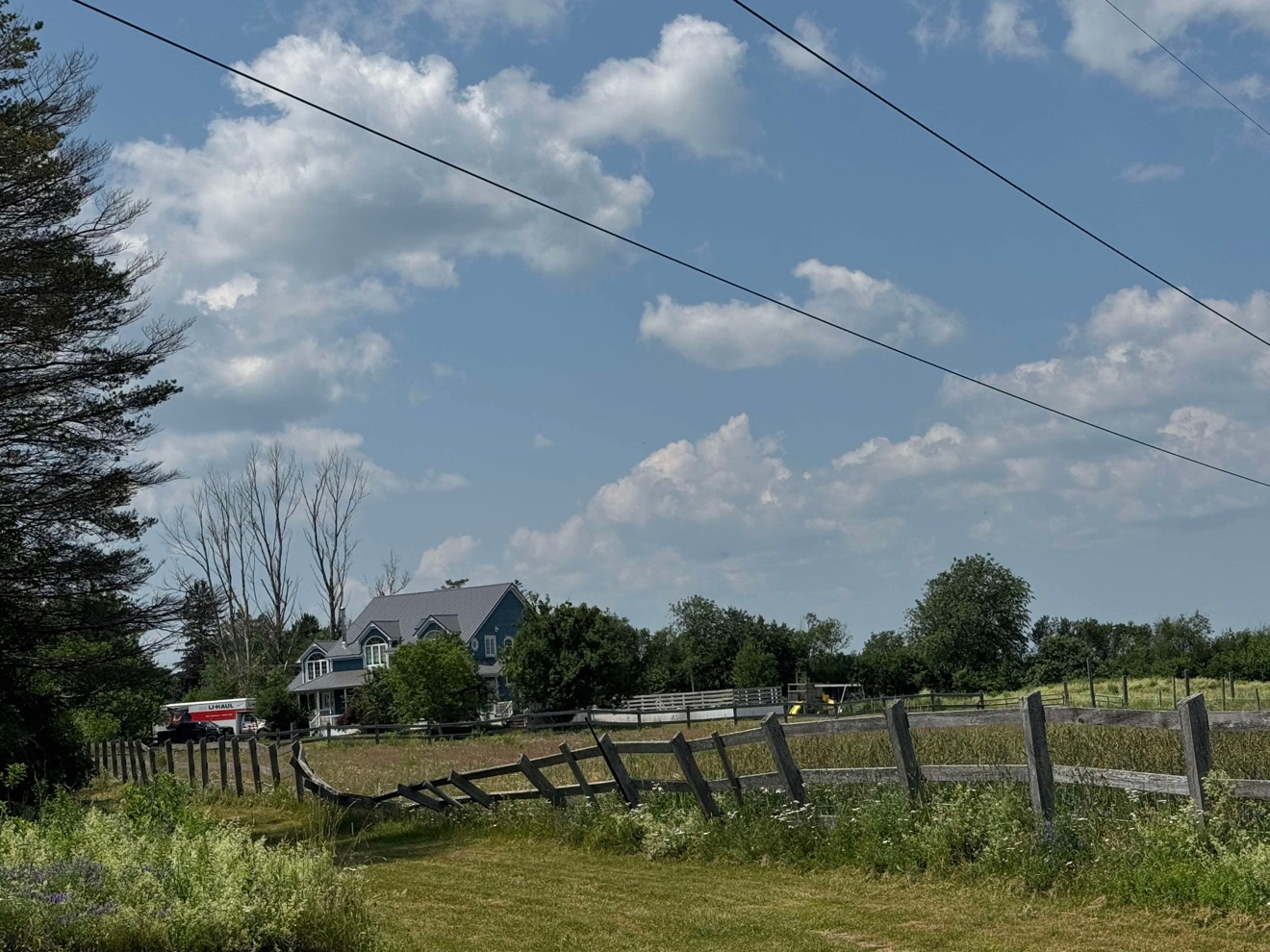
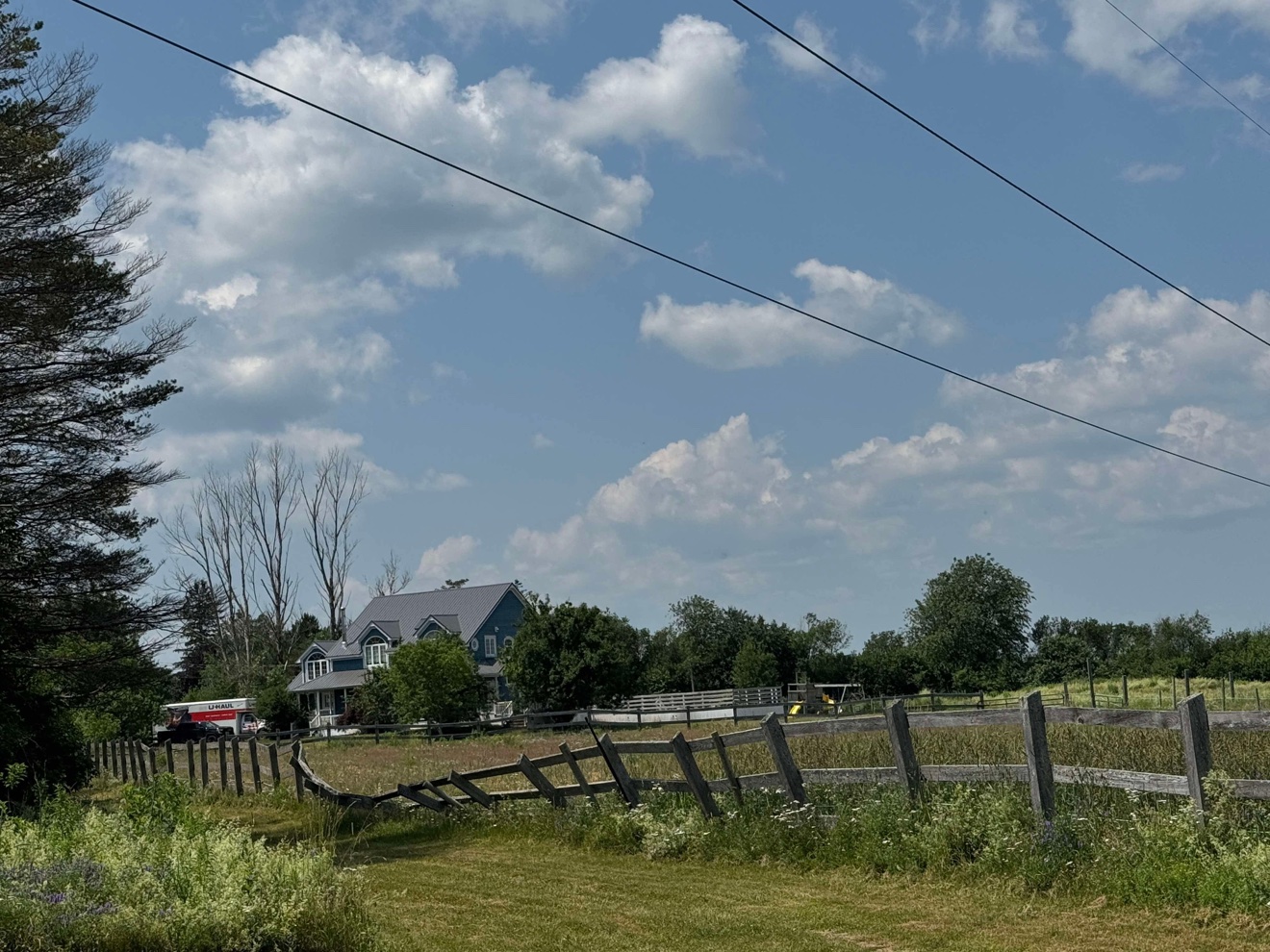
The farmhouse seen from the road on moving day, the U-Haul truck parked in front and the old fence leaning in the foreground
Moving day

The U-Haul in the driveway

The house from the road on moving day — the U-Haul still parked out front, the old fence leaning, the fields rough and overgrown. This is the day Lavender Lamb Ranch stopped being an idea and started being work.

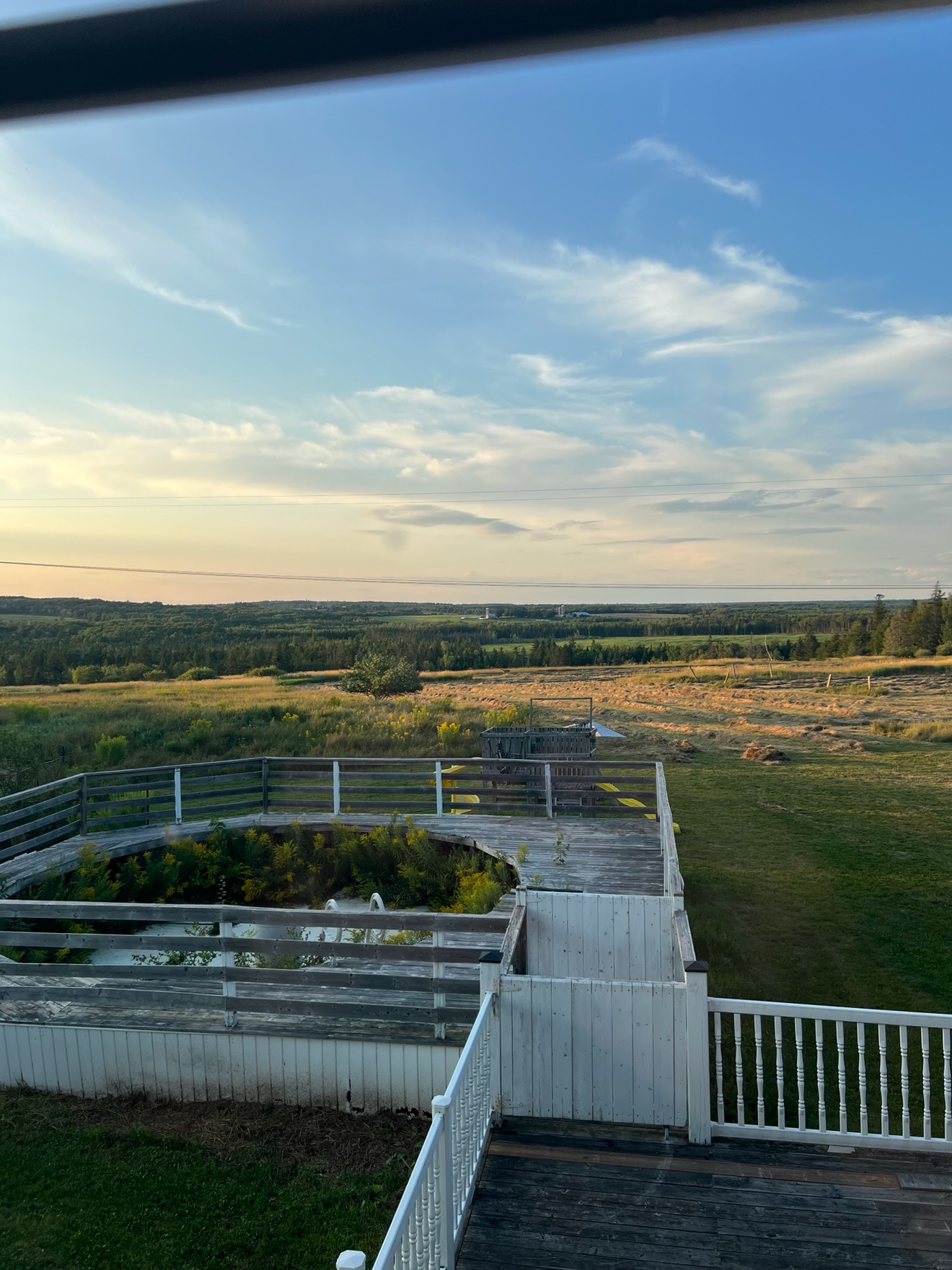
The overgrown pool deck behind the house in August 2025, weeds taking over the deck and rough fields stretching to the horizon
August 2, 2025

What we started with

The view from the house in our first summer: the old pool deck taken over by weeds, tired fences, and rough, overgrown fields. The land had the bones of a farm — and a long list of work waiting for us.

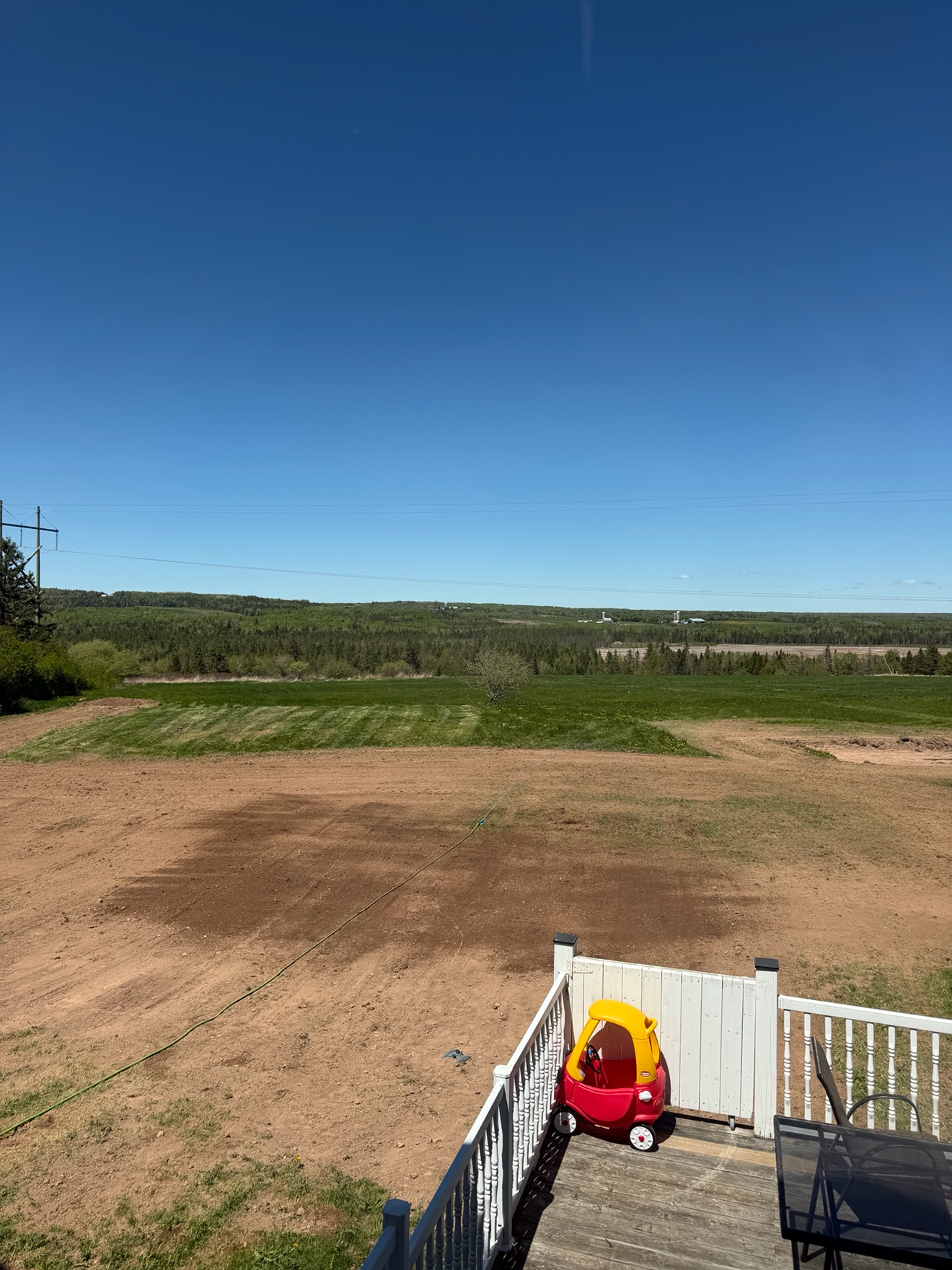
The yard beside the house cleared and graded down to bare earth in May 2026, Dallas's toy car sitting on the deck
May 23, 2026

Clearing & grading the yard

By spring, the yard by the house was cleared and graded down to bare earth — unglamorous, muddy work, but it's where pastures, fences and everything else had to start. Dallas's little car kept watch from the deck the whole time.

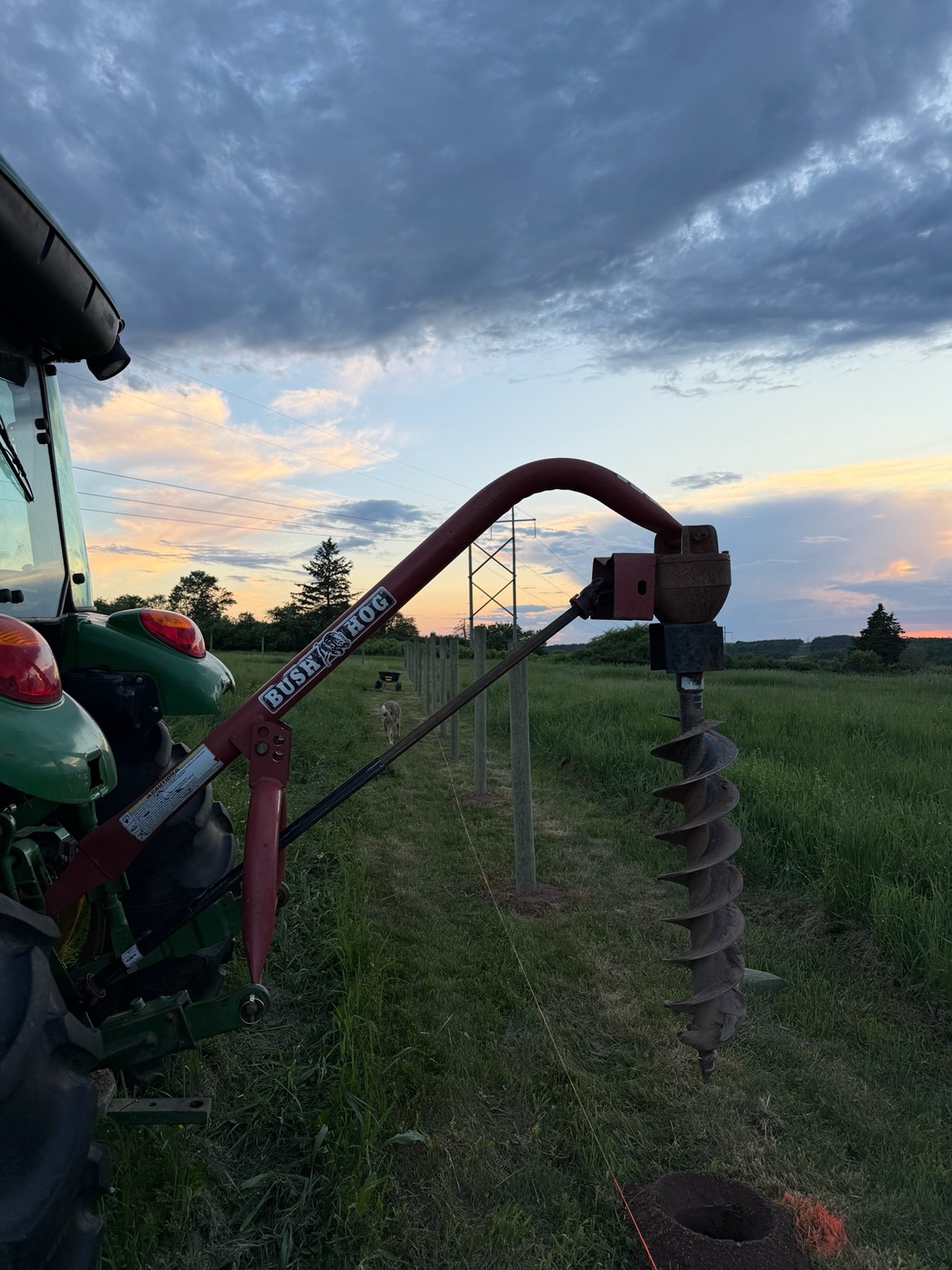
The tractor's post-hole auger raised over a freshly drilled hole at dusk in June 2026, a line of new fence posts behind it
June 2026

Putting up the fences

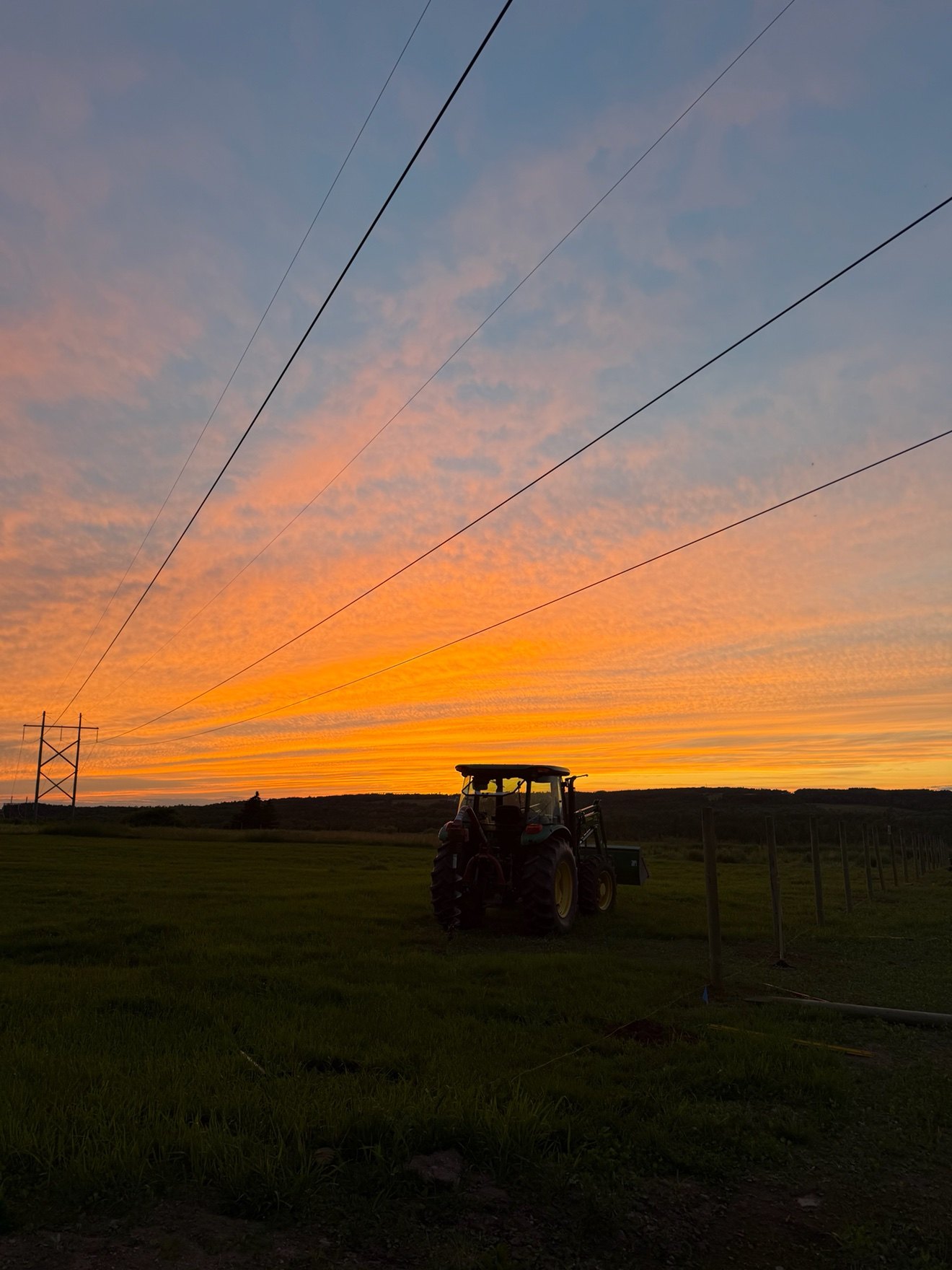
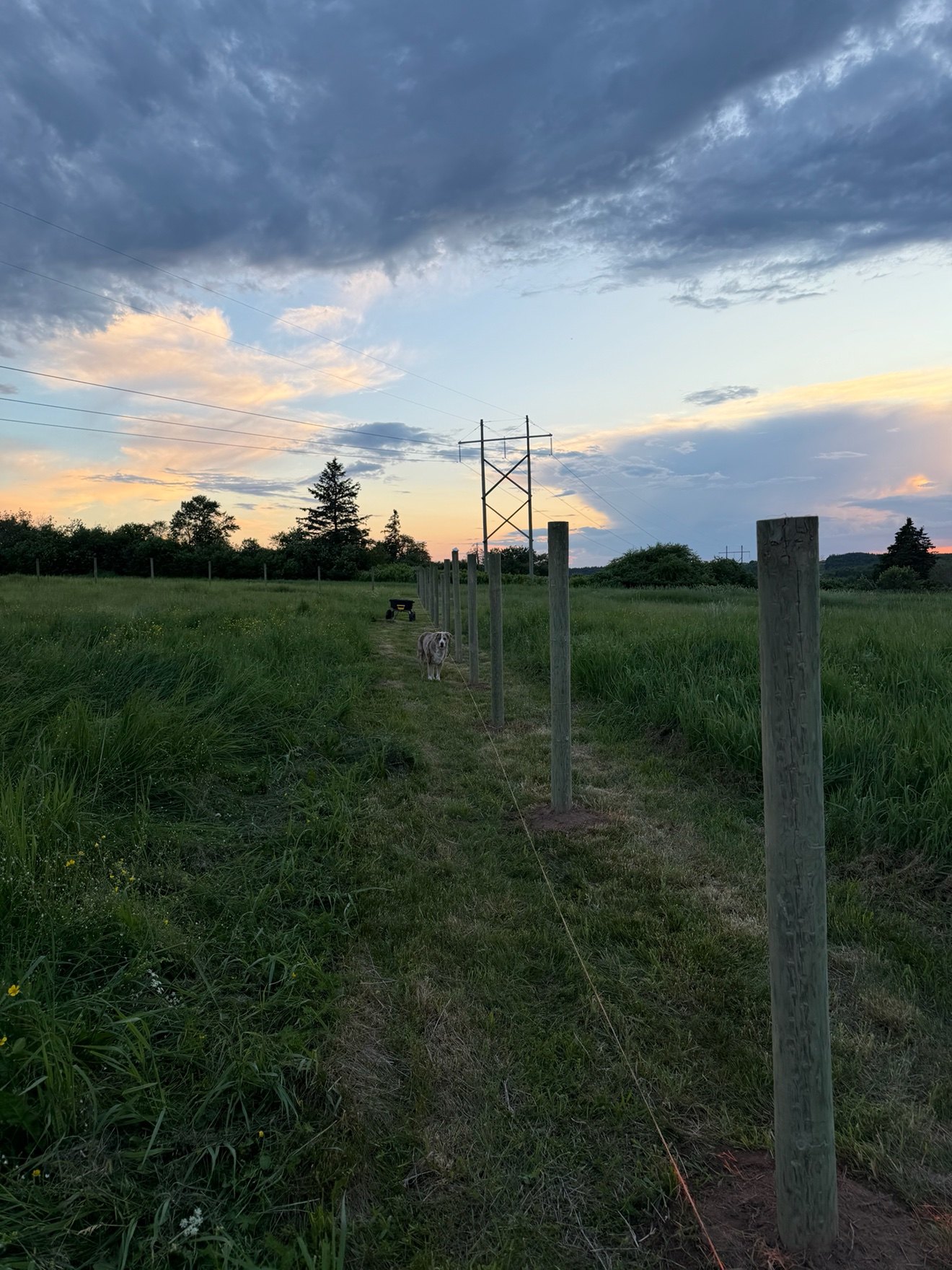
Pastures need fences, and fences start with holes — one for every post. Through June we ran the string line straight, drilled each hole with the tractor's auger and set the posts one by one, working into the evening more than once. Unglamorous, repetitive, essential: this is the work everything else stands on.

Aerial view of the ranch at sunset in July 2026, showing the new white fence lines around a green pasture and the run-in shelter
July 13, 2026

Fences up, shelter built

From the air at sunset, the farm we imagined starts to appear: fresh fence lines around a green pasture, and the run-in shelter standing in the middle of it. Months of posts, wire and weekends, all in one view.

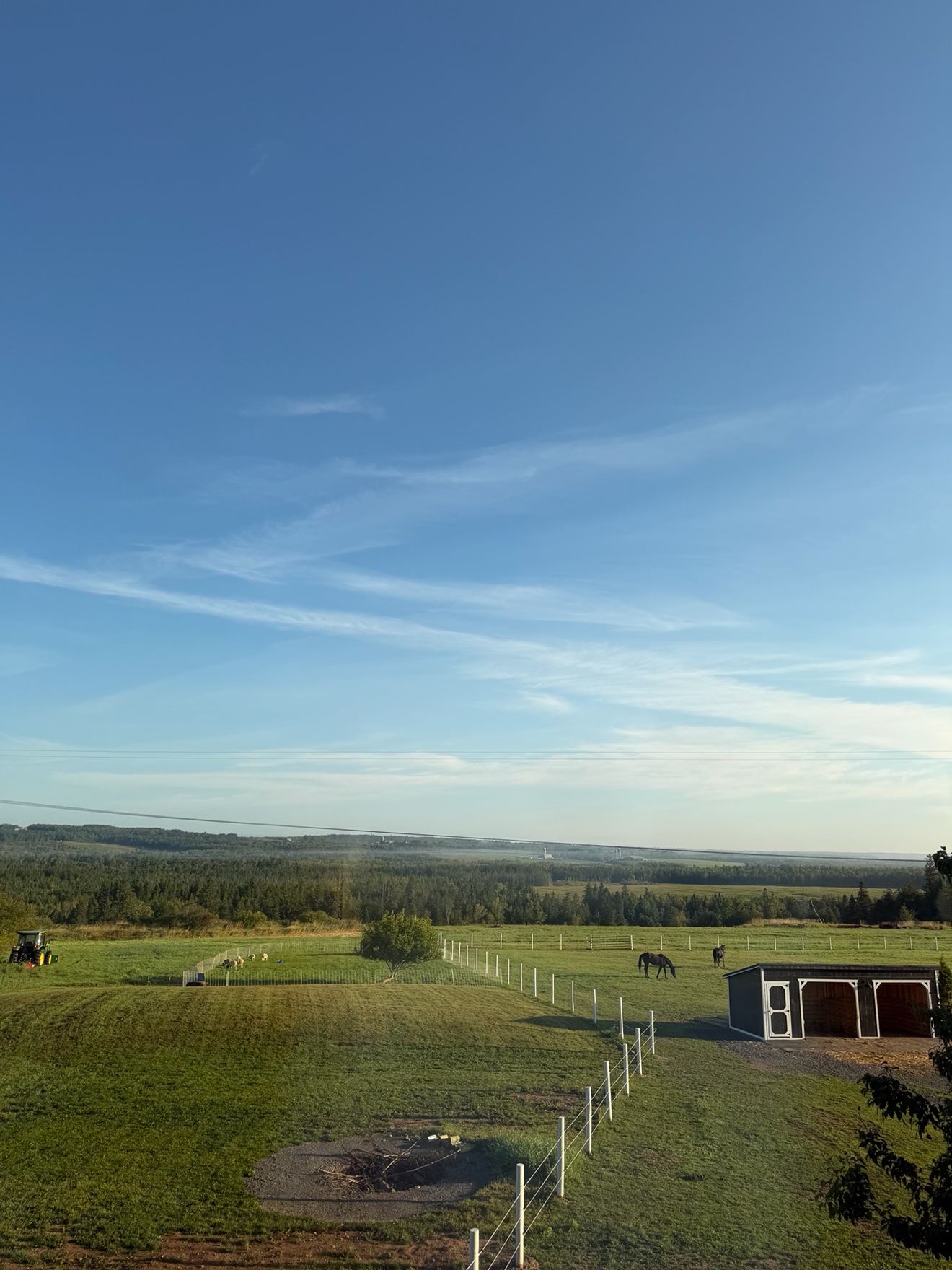
The ranch on an August 2026 morning — fenced green pastures, horses grazing by the shelter, the sheep in their paddock and the tractor in the field
August 27, 2026

The ranch today

A morning on the ranch now: fences straight, the shelter in place, horses grazing, the sheep in their paddock and the tractor ready in the field. The work isn't finished — it never really is on a farm — but this is home.

Still building

The next chapter is already on its way

Our ewes are pregnant, with our first lambs expected in December 2026–January 2027, and the flock growing a little more each season. Follow along on Facebook to watch the farm keep evolving.

Visit & Order

How to get your eggs

Everything is pickup at the ranch in Salisbury, New Brunswick. Quantities are small and fresh — reserving ahead guarantees your carton is waiting for you.
1

Message us

Email us or message the Facebook page with what you'd like — fresh eggs, hatching eggs, or a question about the flock.

2

Reserve by e-transfer

Send an e-transfer to lavenderlambranch@gmail.com to reserve — $7 per carton of fresh eggs, $25 per dozen hatching eggs.
3

Pick up at the ranch

Come by Lavender Lamb Ranch in Salisbury to pick up. Say hello to the hens — and maybe spot Bo-Peep and Sully on duty.

Thank you for supporting local agriculture

Our dream isn't to become the biggest farm. It's to raise healthy animals, produce high-quality food right here in New Brunswick, and give Dallas a childhood filled with nature and responsibility. This is only the beginning.

How It Started

It all started with Dallas

If someone had asked us a few years ago where we saw ourselves in the future, we probably never would have answered, “On a farm.” Yet that's exactly where life has led us.

The day Dallas was born, everything changed. We wanted him to grow up with room to run, build forts in the woods, explore nature, care for animals, and learn the values that everyday farm life teaches best — responsibility, patience, respect, and hard work. Animals depend on us every single day, rain or shine.

When Ashley joined this adventure, the vision became a shared dream. We didn't simply want to buy a house in the country — we wanted to build a life with purpose. Then we discovered that Canada still imports much of the lamb it eats, mainly from Australia and New Zealand, while demand keeps growing and there aren't enough sheep producers to meet it — especially here in New Brunswick.

“We looked at each other and asked — why not us?”
— Marc-Antoine & Ashley, Lavender Lamb Ranch

That question became Lavender Lamb Ranch: purebred Dorper sheep for meat production, a colourful flock of free-range hens, three horses, our own hay — and a farm we're building a little more every season.

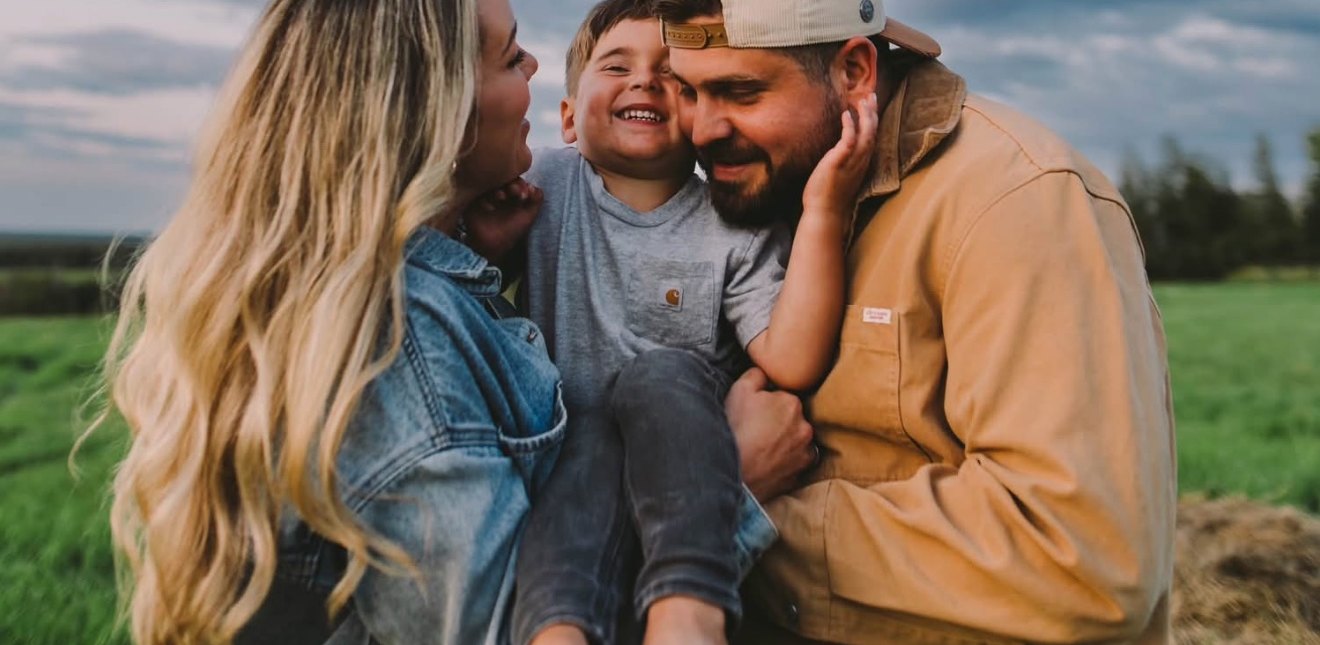
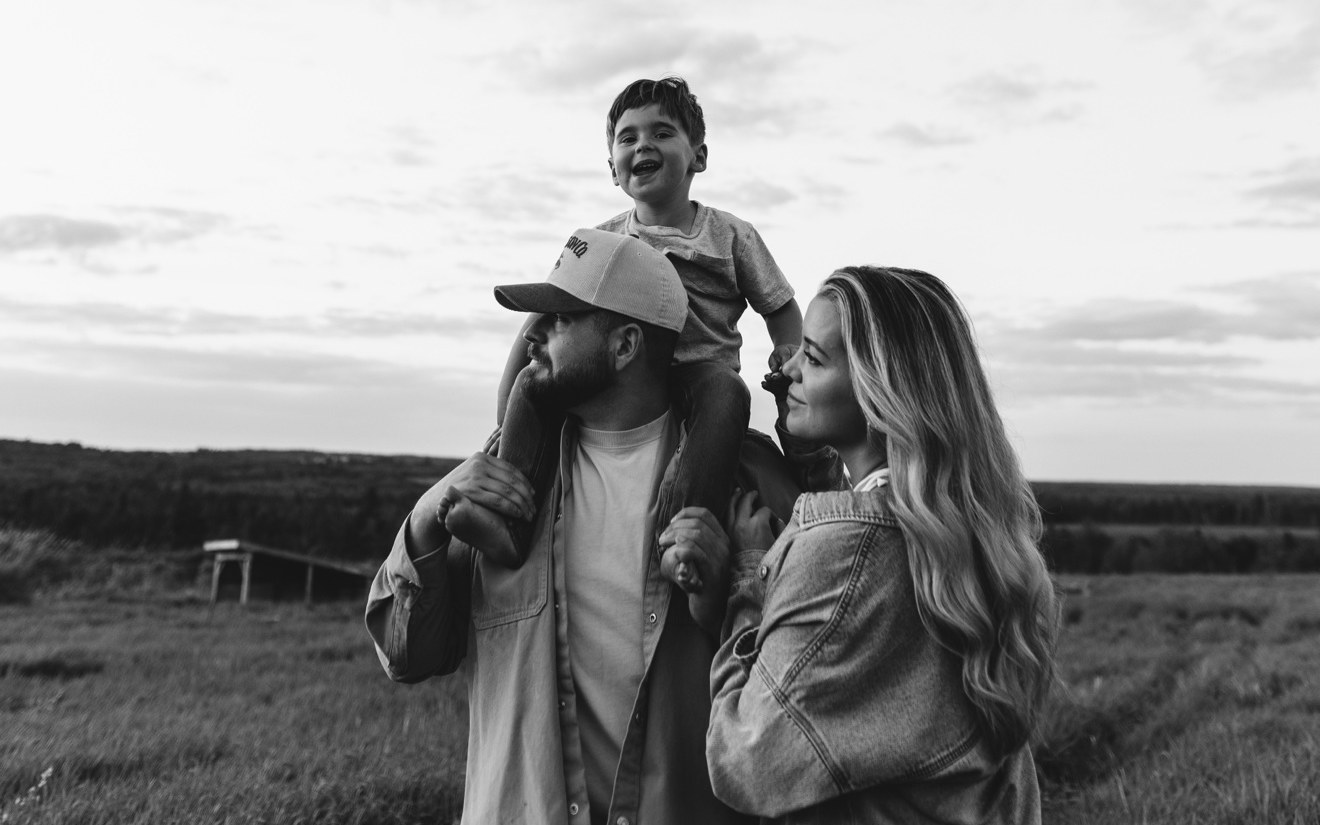
Dallas laughing on Marc-Antoine's shoulders in the field, Ashley standing beside them — black and white

The Chickens

Our hens & their colourful eggs

A colourful, free-range crew laying beautiful eggs in shades of brown, blue, green and speckled — so every carton is a little different. Fresh eggs $7 per carton, hatching eggs $25 per dozen, pickup at the ranch.
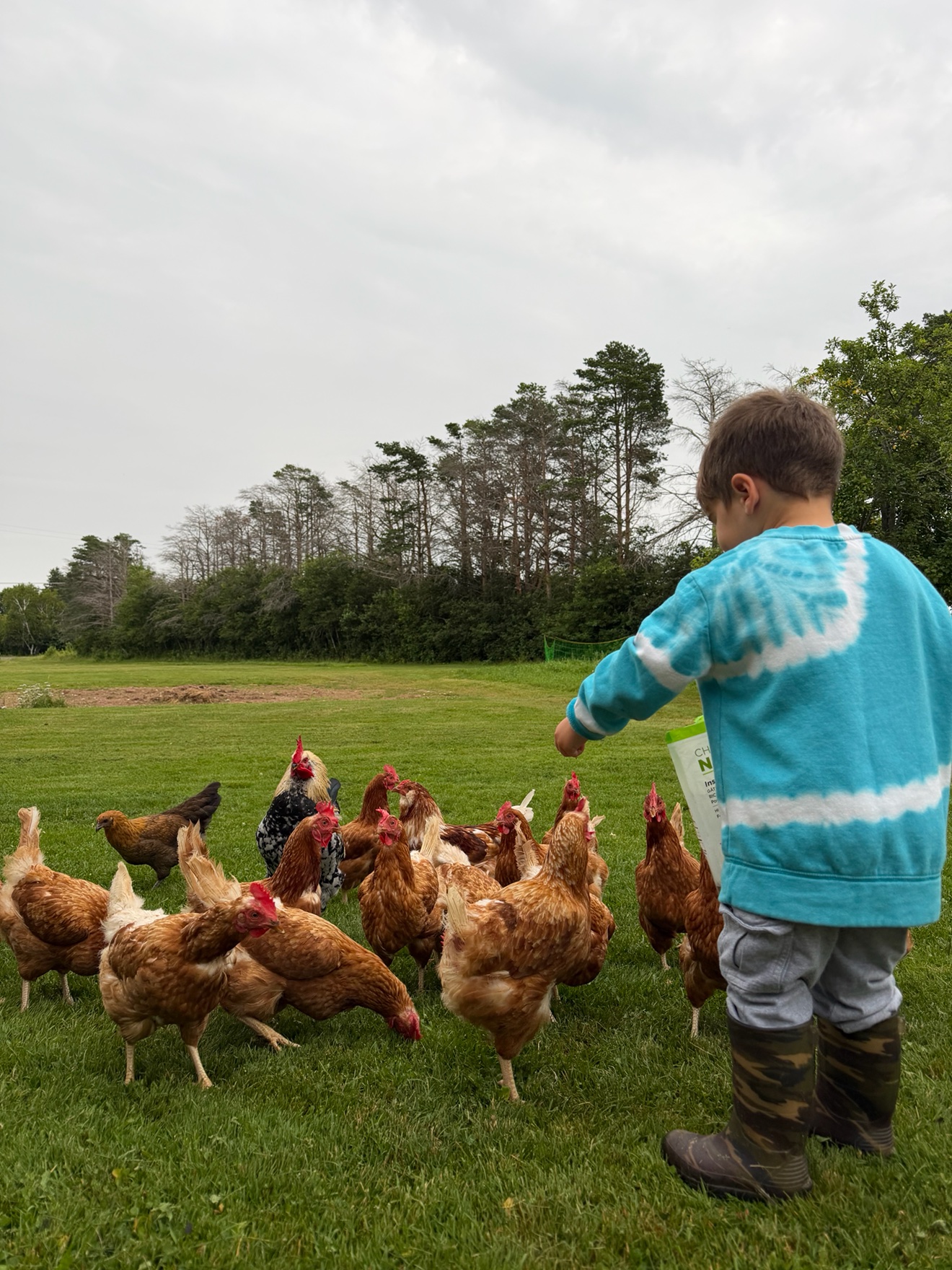
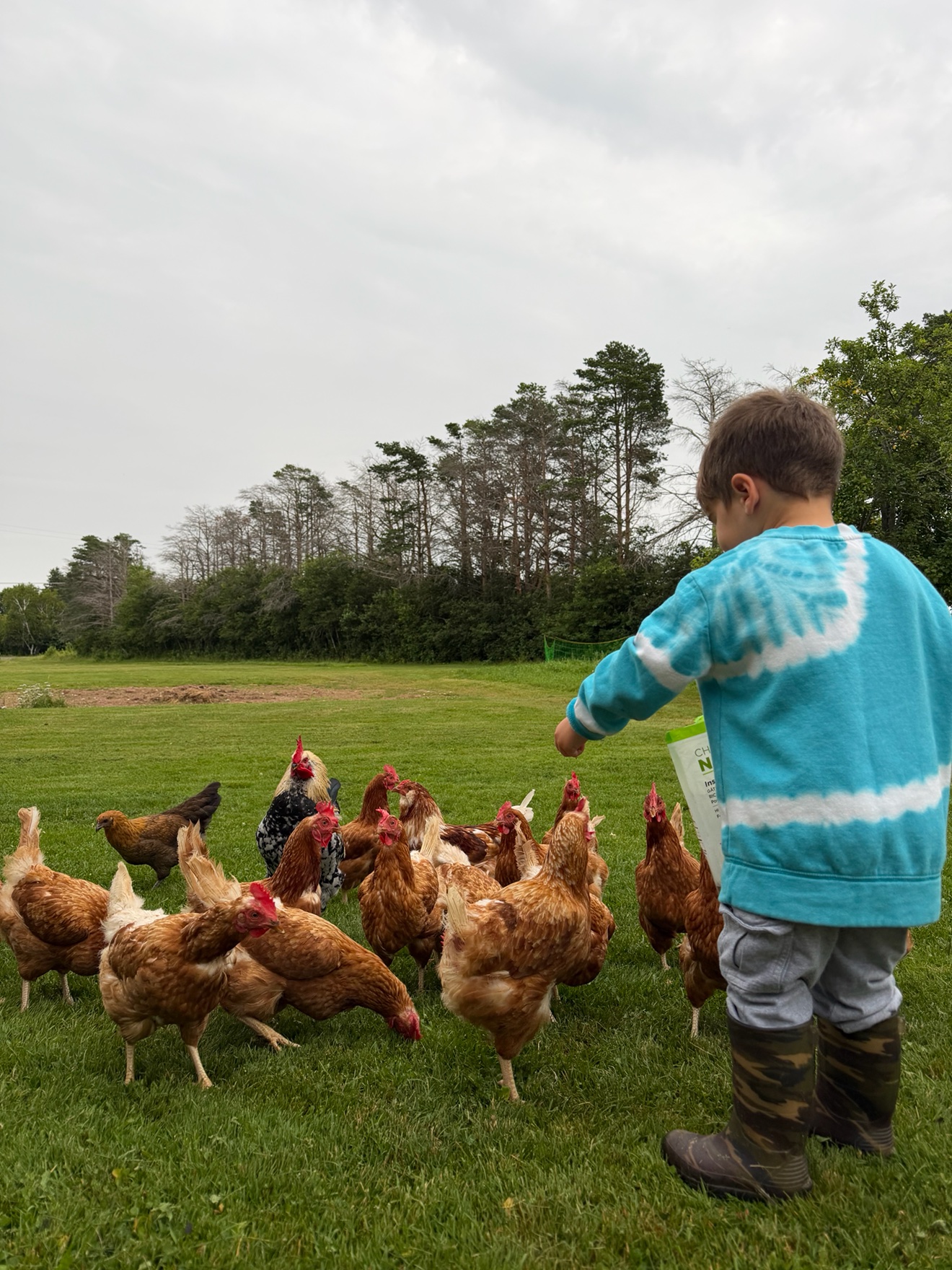
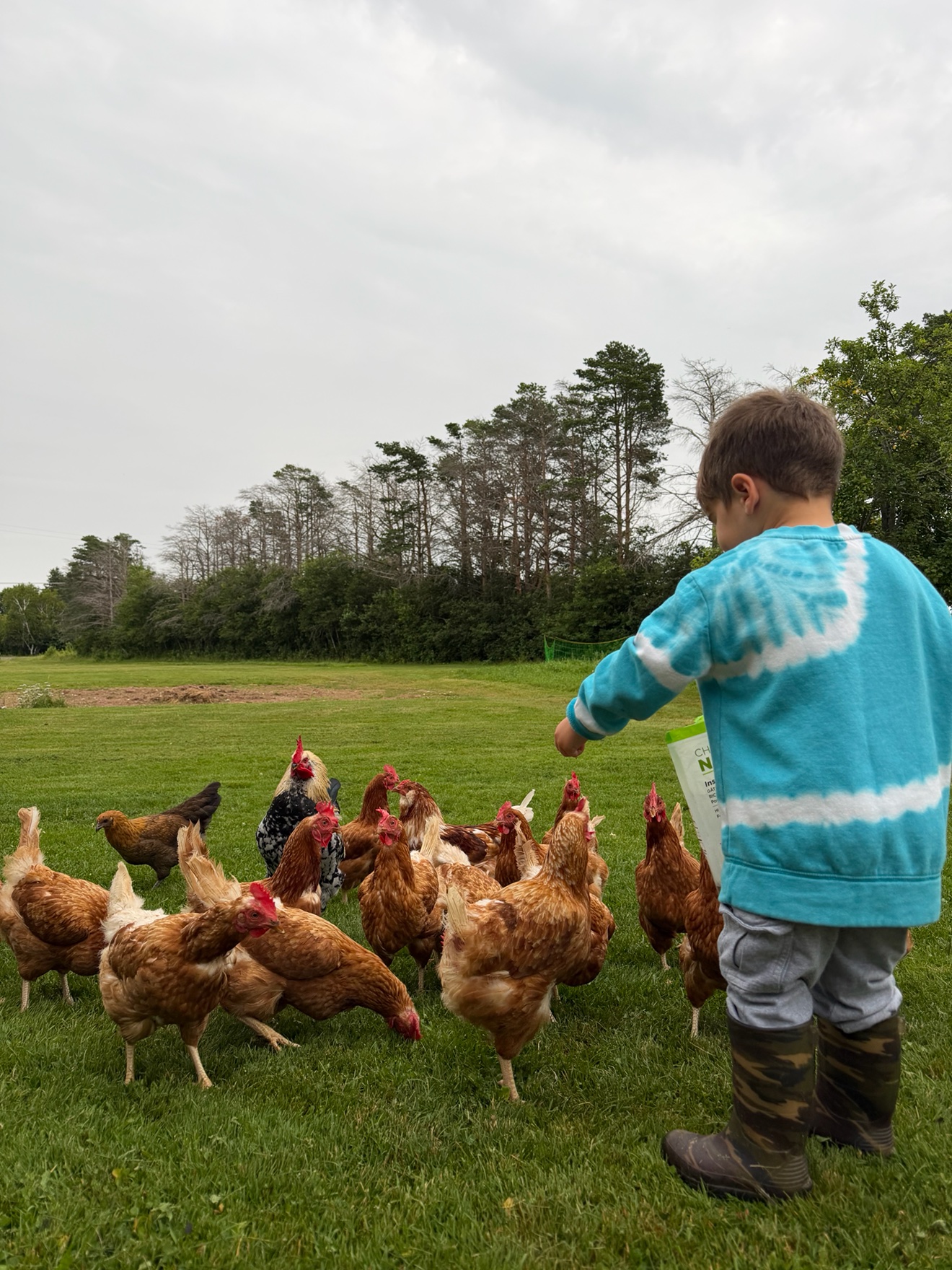
Dallas scattering feed for the free-range hens on the lawn, the flock gathered around him

Free-range & family-raised

Five breeds, one colourful flock

Our hens roam, scratch and lay naturally in a clean, healthy environment. Dallas helps feed them, and the day's gather goes straight into cartons for neighbours and customers in Salisbury.

Ameraucana

Known for blue eggs — one of the colours that makes our cartons so varied.

Polish

Our crested characters — unmistakable in the flock and a favourite to spot in the field.

Easter Eggers

Layers of blue, green and aqua eggs — no two hens lay quite the same shade.

Ayam Cemani

Our striking black hens — the rare-breed members of the flock.

ISA-Brown

Our brown hens — the flock's steady layers, and the ones behind so many of the brown eggs in every carton.

Cartons of colourful fresh farm eggs
Available now

Fresh Farm Eggs

$7 per carton
Pickup at the ranch — e-transfer to reserve your carton.

Colourful hatching eggs sorted in incubator trays
Available now

Hatching Eggs

$25 per dozen

Pinkish/beige, blue, aqua and olive eggs from our colourful flock.

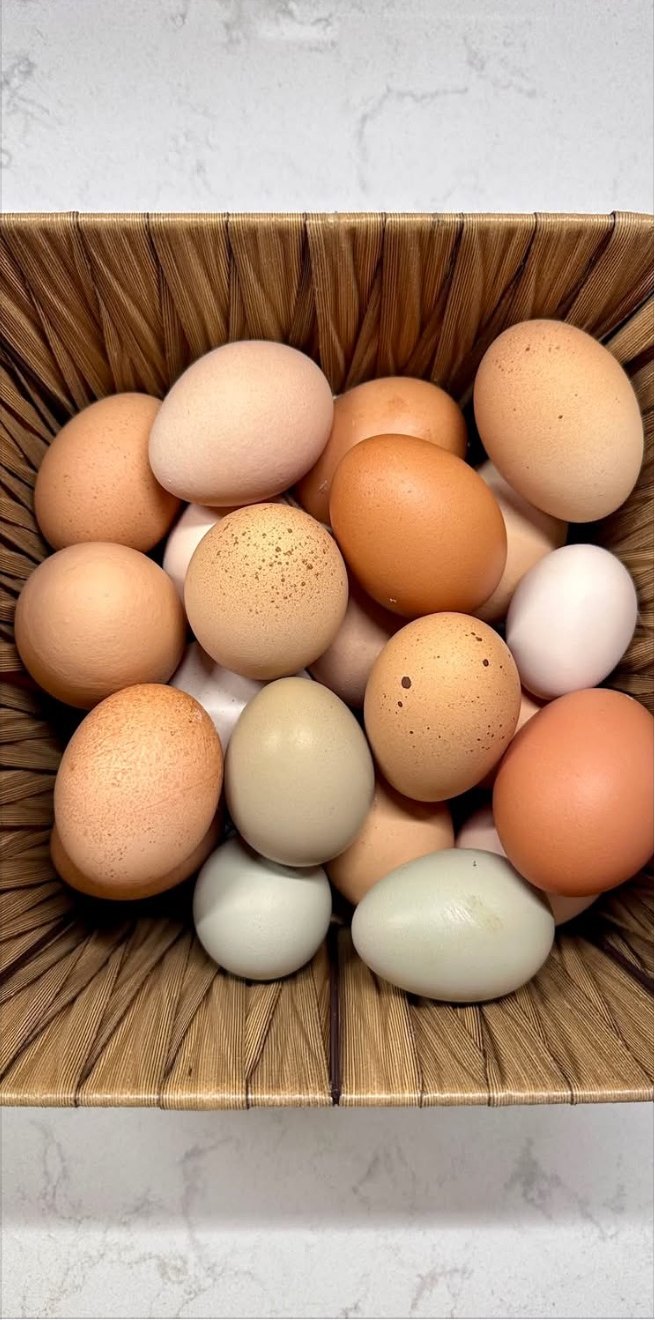
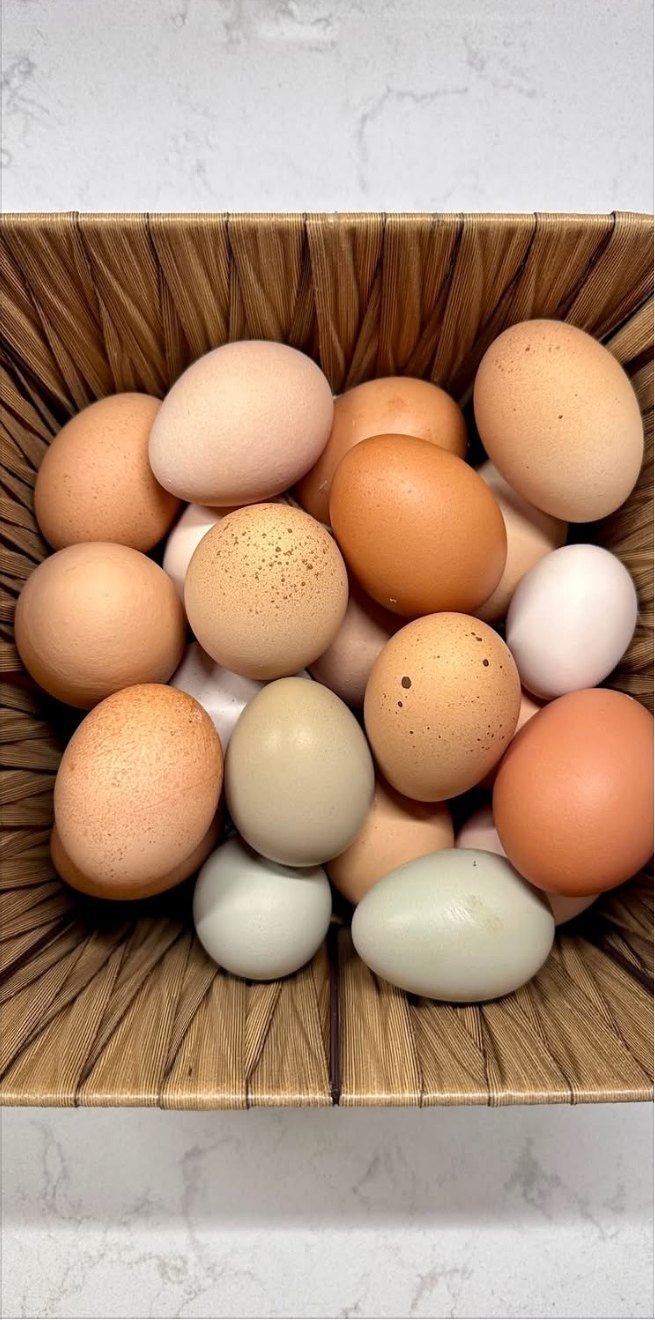
A basket of freshly gathered eggs in brown, speckled, sage and pale blue
From the ranch

The day's gather

Brown, speckled, sage and pale blue — gathered fresh, every day.

The Horses

Three horses — Mick, Velvet & Pepper

Sheep and hens are the heart of the ranch, but they're not the whole story. The ranch is also home to three horses — Mick, Velvet and Pepper — part of the family, and part of daily life, from morning feedings to evenings in the pasture.

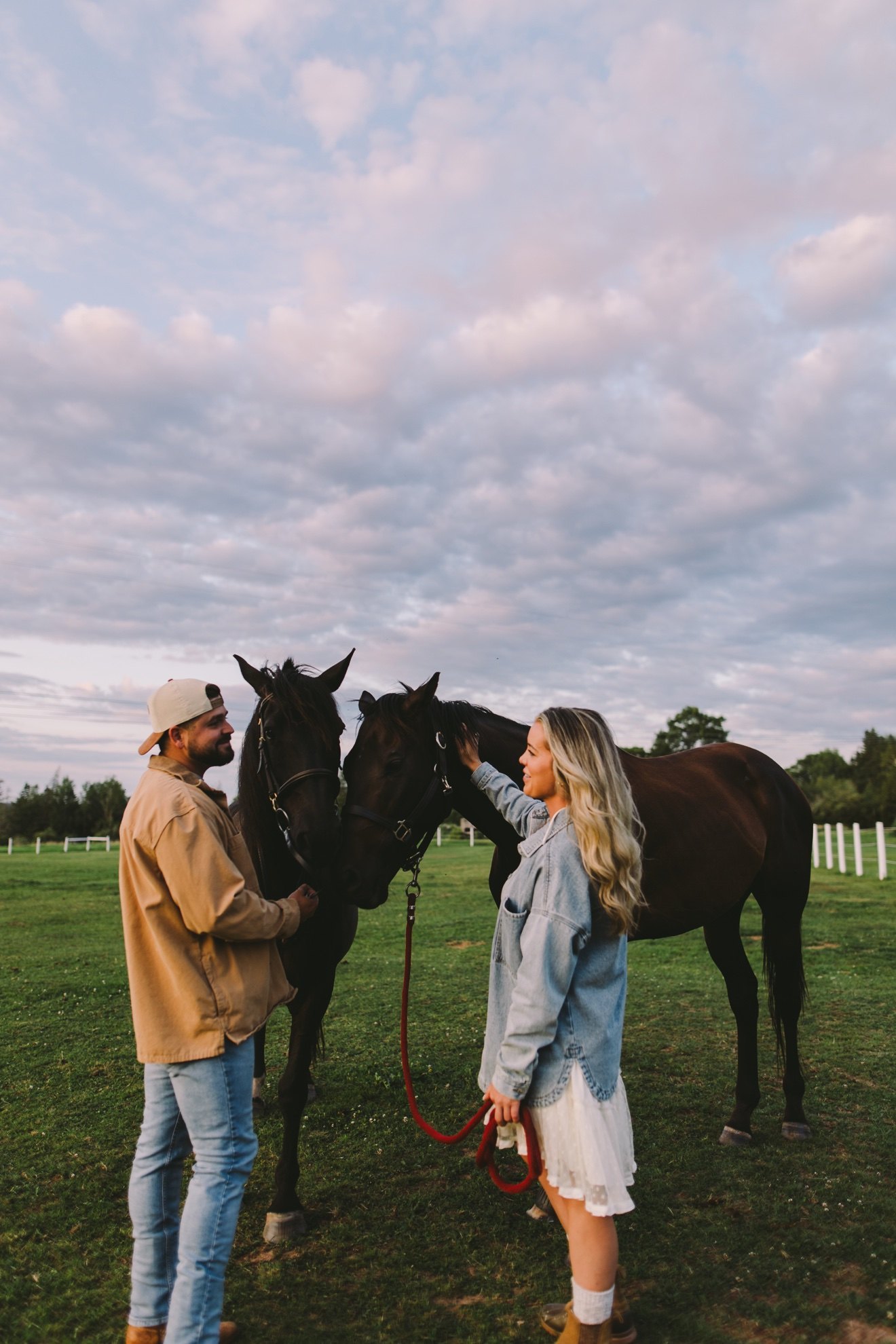
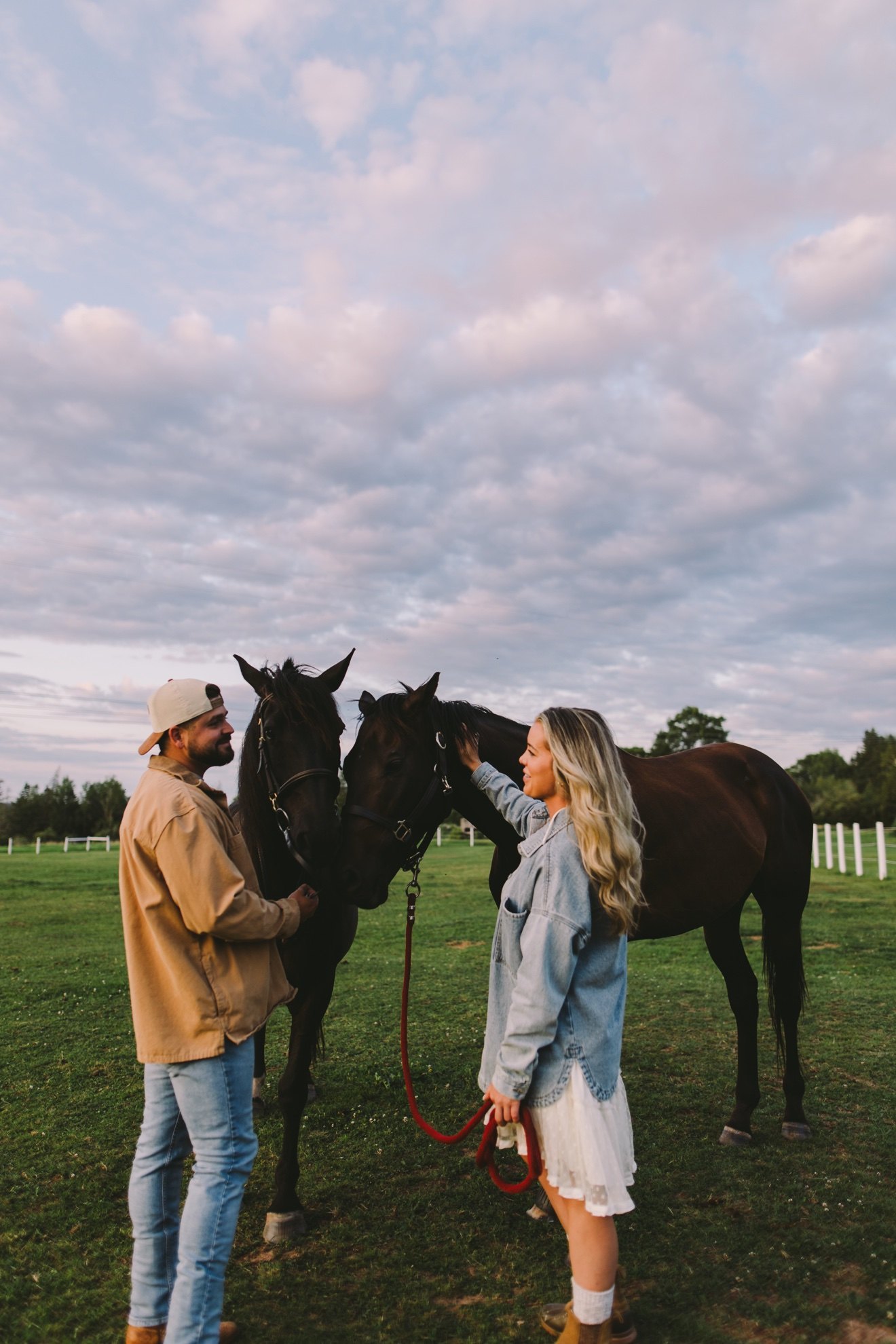
Marc-Antoine and Ashley in the pasture at sunset with two of the ranch's dark horses, holding their halters

Daily life

Part of the family

That's Marc-Antoine and Ashley with two of our three, on a summer evening in the pasture. You'll also catch the horses in our drone tour and in the evolution photos — grazing the big pasture by the shelter while the sheep keep to their paddock and Bo-Peep and Sully watch over the flock.
Meet the Horses

Mick, Velvet & Pepper

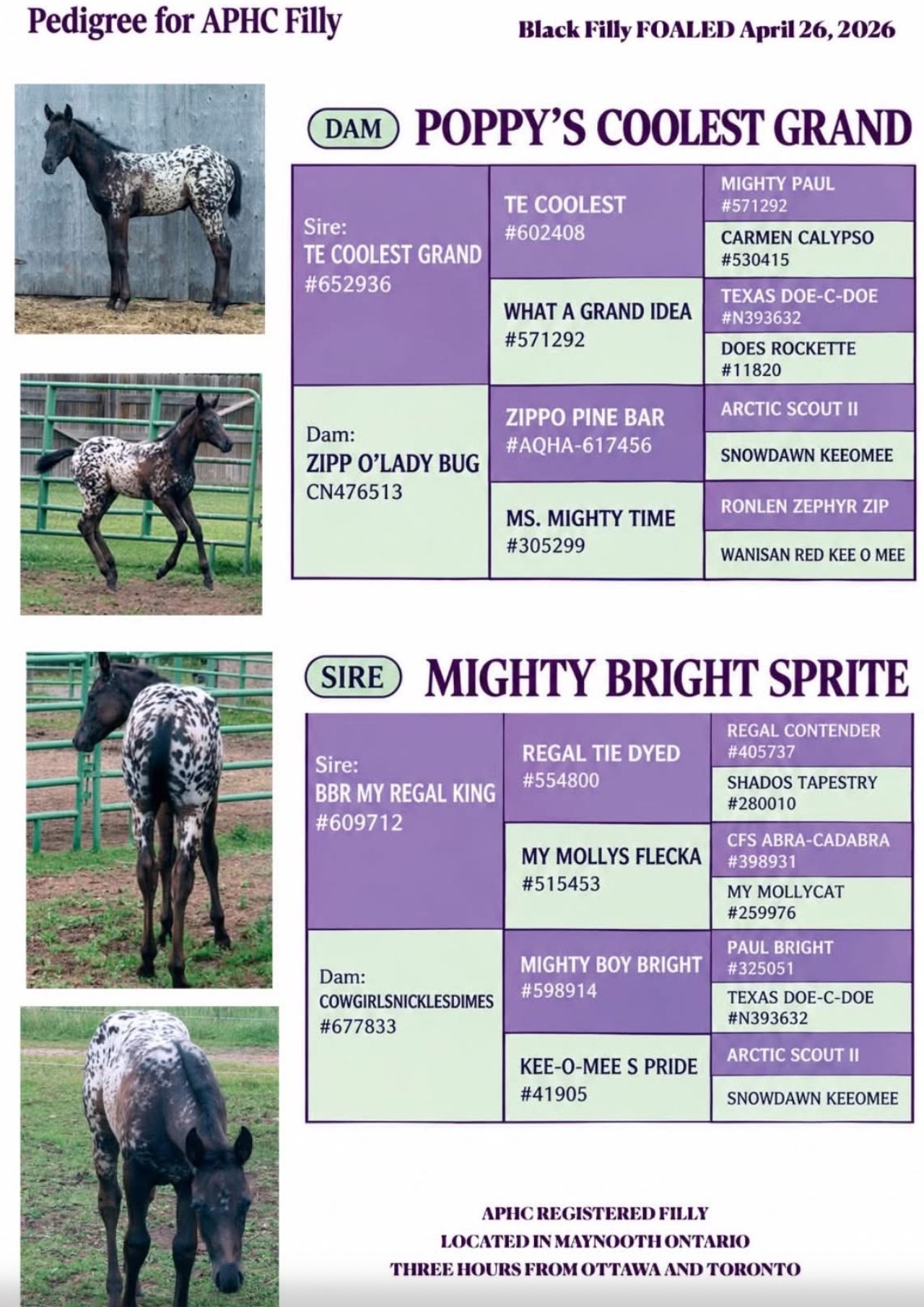
Our three horses, by name: Mick and Velvet, the two dark horses you'll see all over this page, and Pepper — the little spotted filly who came to the ranch from Ontario in the fall of 2026, and stole our hearts before she even arrived.

Marc-Antoine and Ashley in the pasture at sunset with the ranch's two dark horses, Mick and Velvet
In the pasture

Mick & Velvet

NamesMick & Velvet
Life hereEvening rides in the pasture, morning feedings, and long days grazing the big pasture by the sheep shelter
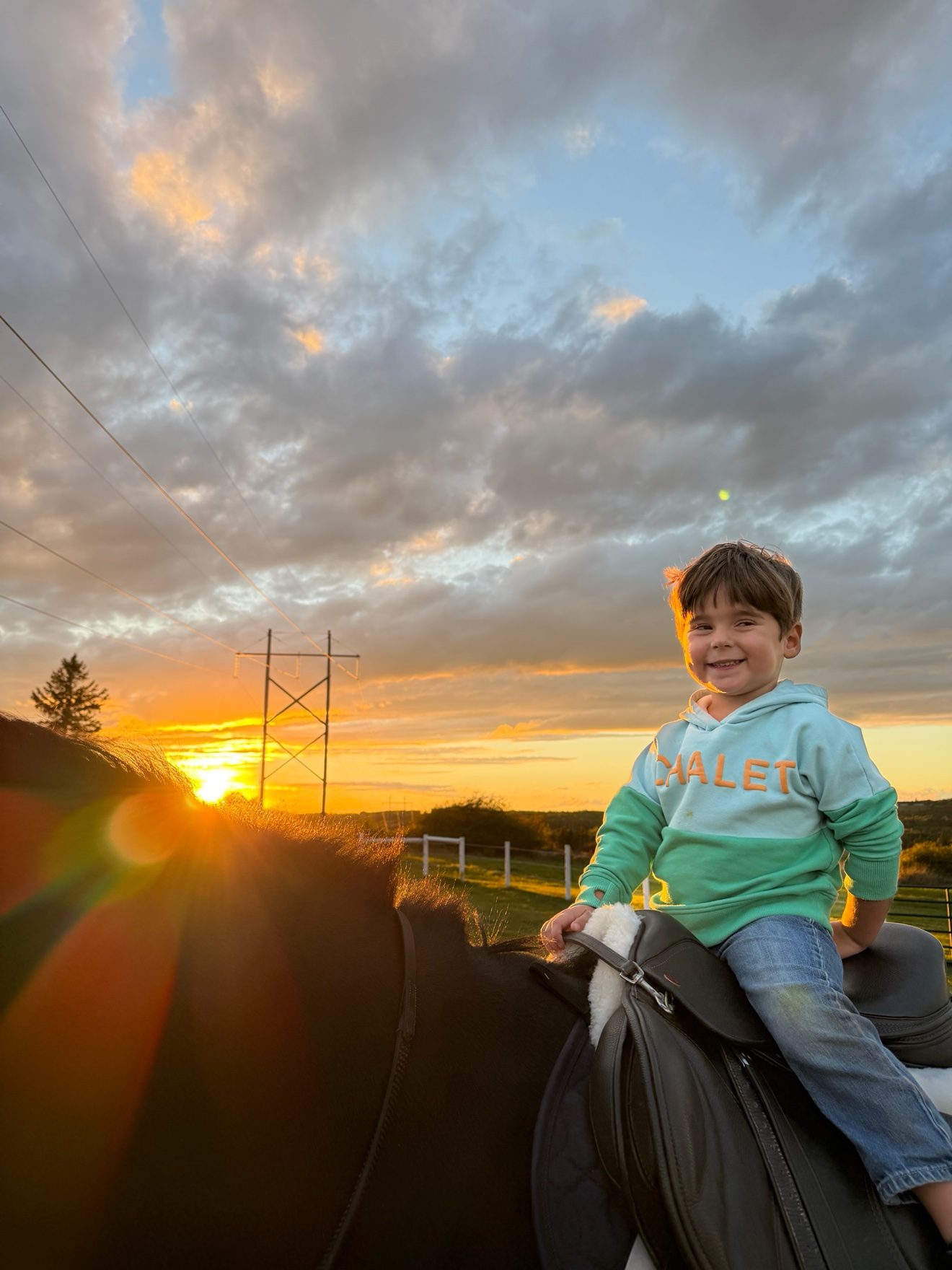
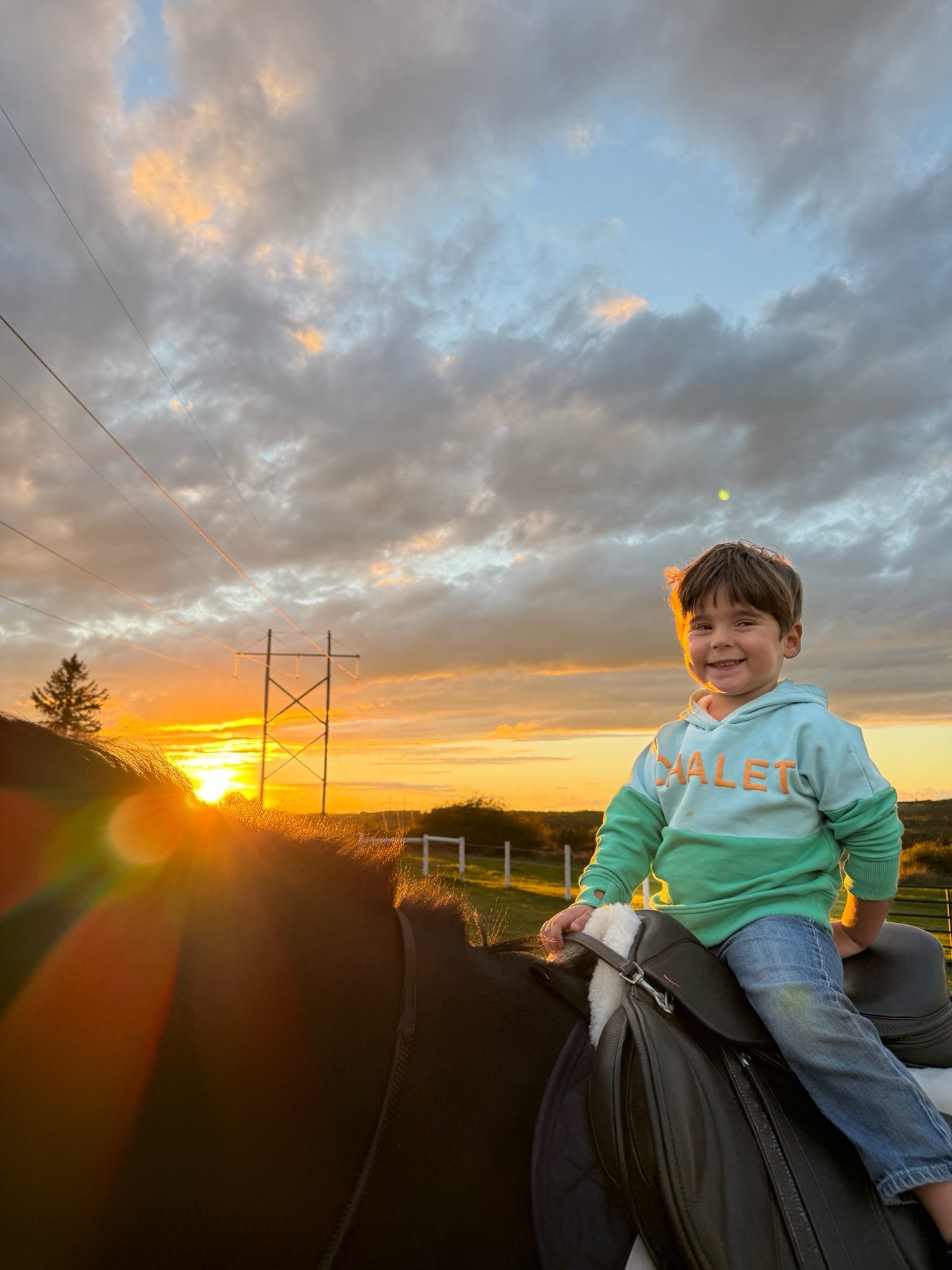
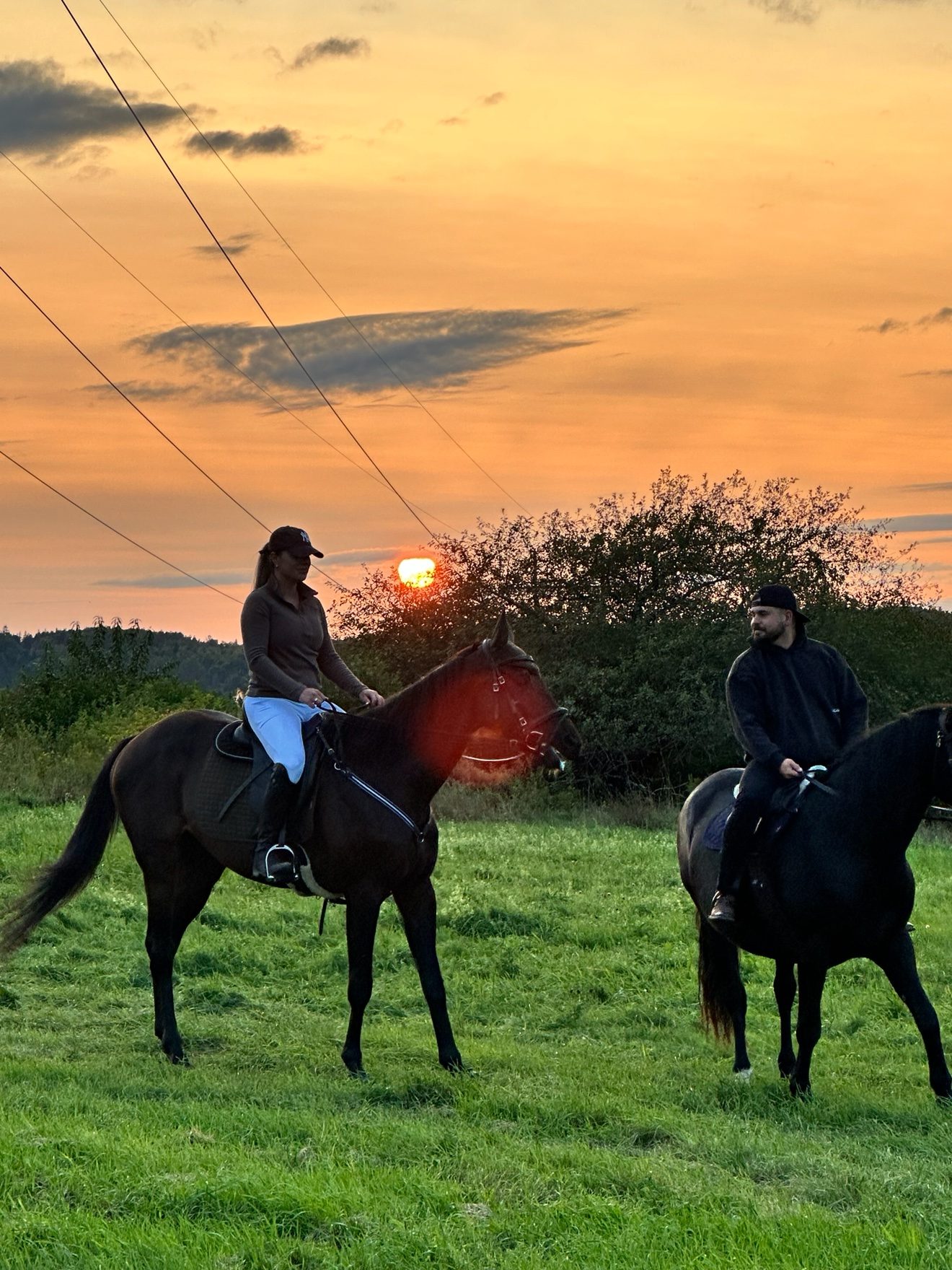
Look forThe two dark horses in our photos and drone tour — Dallas has already claimed a saddle on one of them
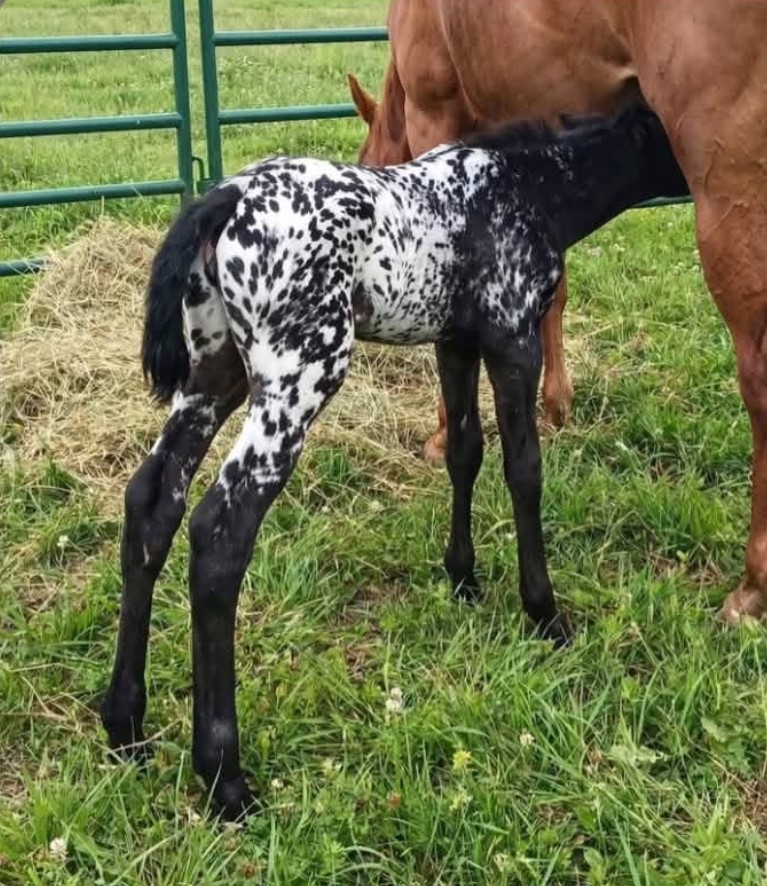
Pepper, a young black-and-white spotted Leopard Appaloosa filly, nursing from her mother in a green paddock in Ontario
Newest arrival

Pepper

BreedRegistered Leopard Appaloosa filly, with a Quarter Horse pedigree
FoaledApril 26, 2026 — a black filly, five months old when we announced her
SireMighty Bright Sprite
DamPoppy's Coolest Grand
FromMaynooth, Ontario — joined the ranch in the fall of 2026
Pepper's pedigree chart — an APHC registered black filly foaled April 26, 2026, sire Mighty Bright Sprite, dam Poppy's Coolest Grand, with four photos of the spotted filly
From our fields

Hay from our own fields

We make our own hay, cut and baled right here on the ranch — see the fields, the old equipment and the haymaking video on the Hay page.

The Hay

Our own hay

We make our own hay right here on the ranch. It's cut and baled from our own fields with our old equipment, and it keeps the flock fed all through the New Brunswick winter.

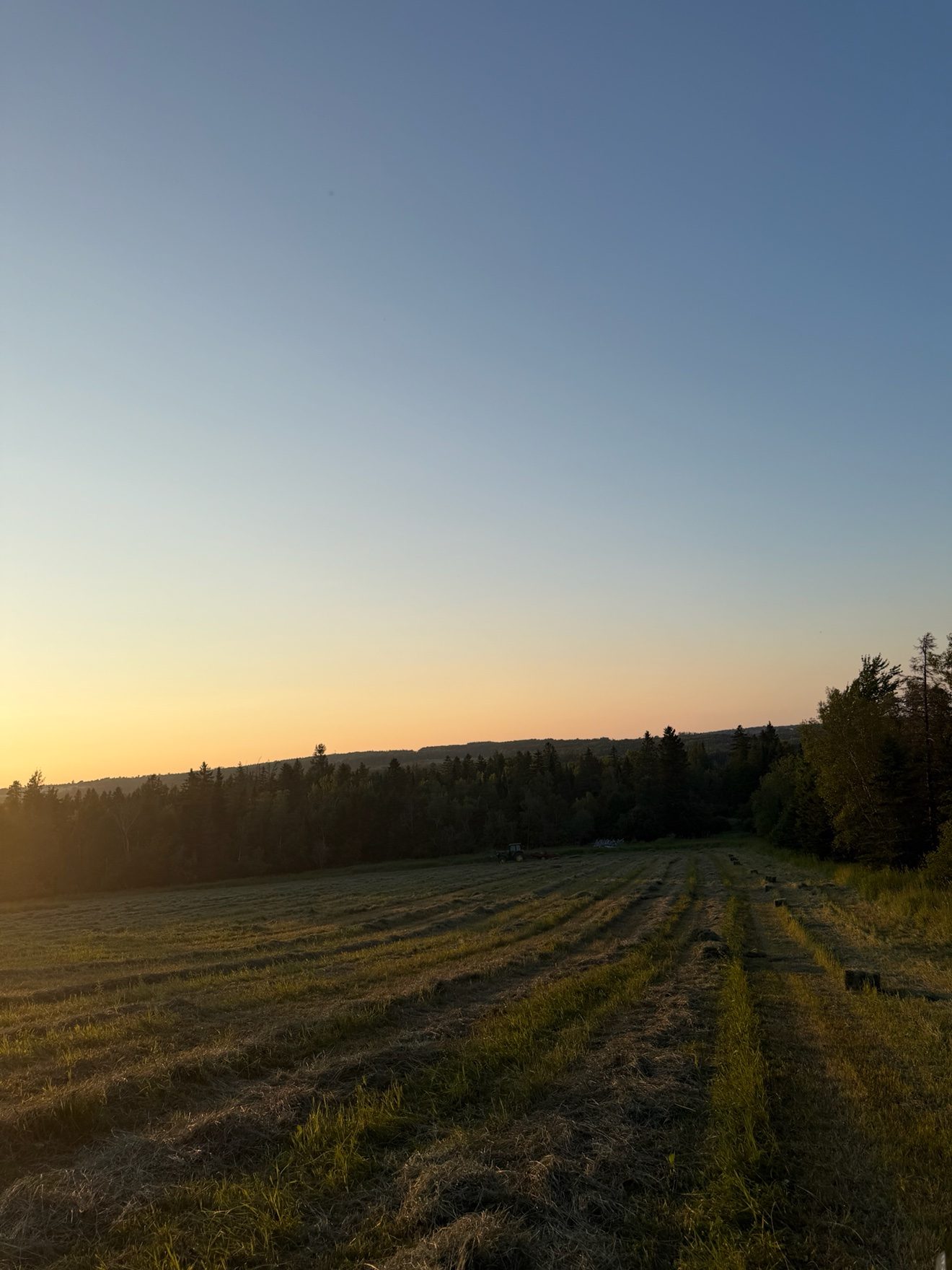
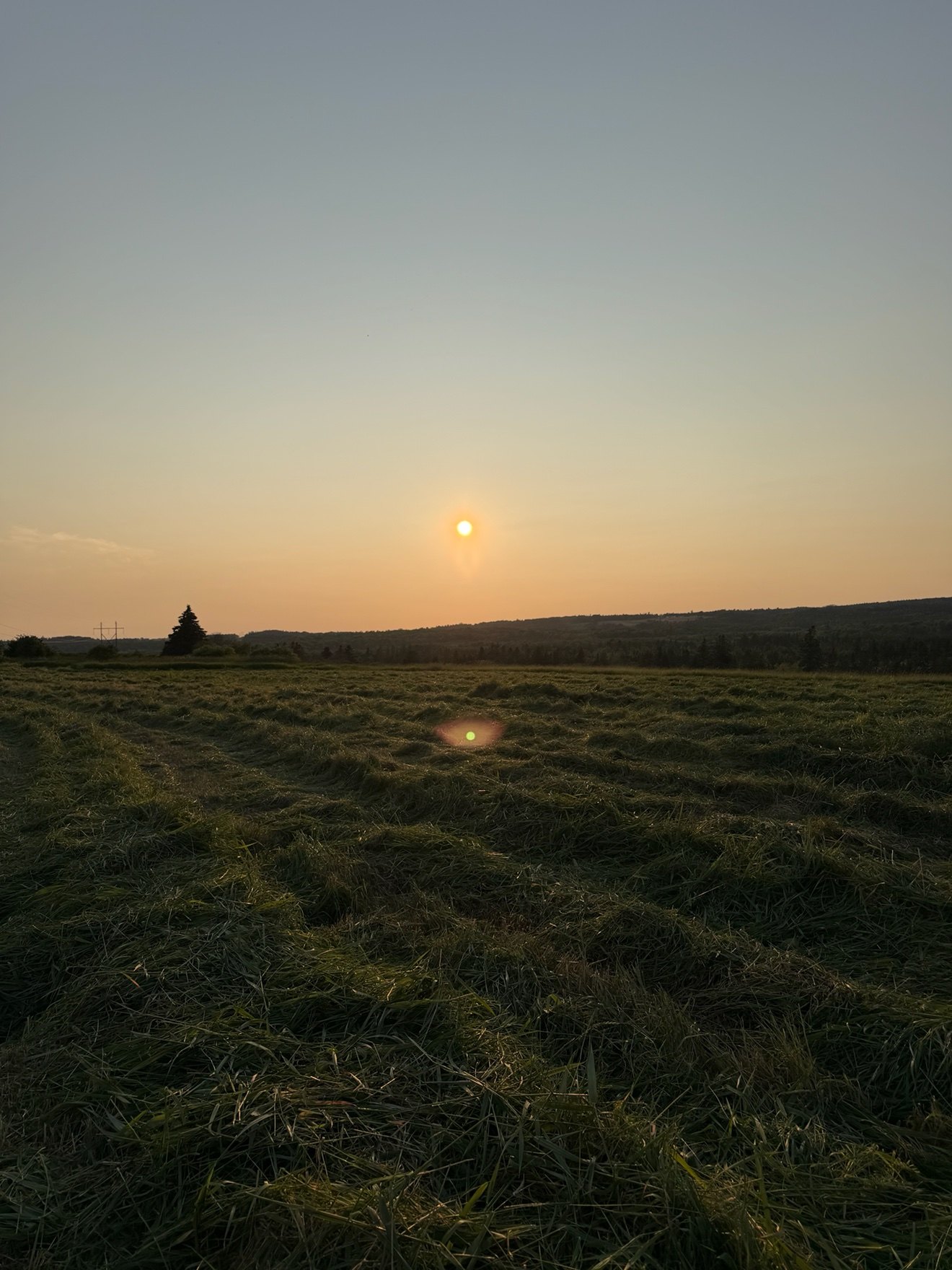
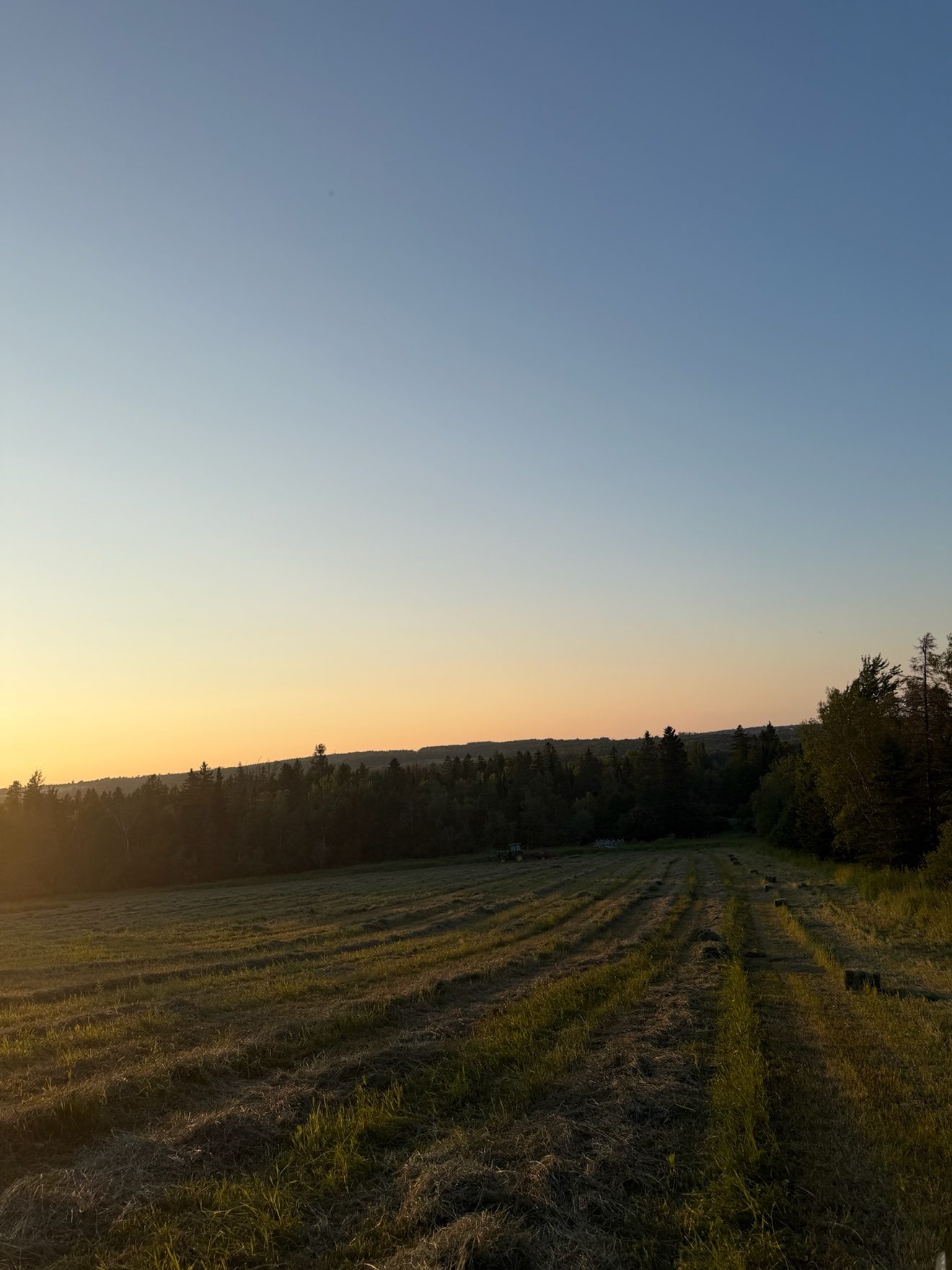
Rows of freshly cut hay and scattered bales stretching across the field at sunset, the treeline in shadow

From Our Own Fields

Cut here, baled here, fed here

When winter settles over Salisbury, the flock eats what our own fields grew all summer — hay we cut, cured and baled ourselves, put up from hay days in July.

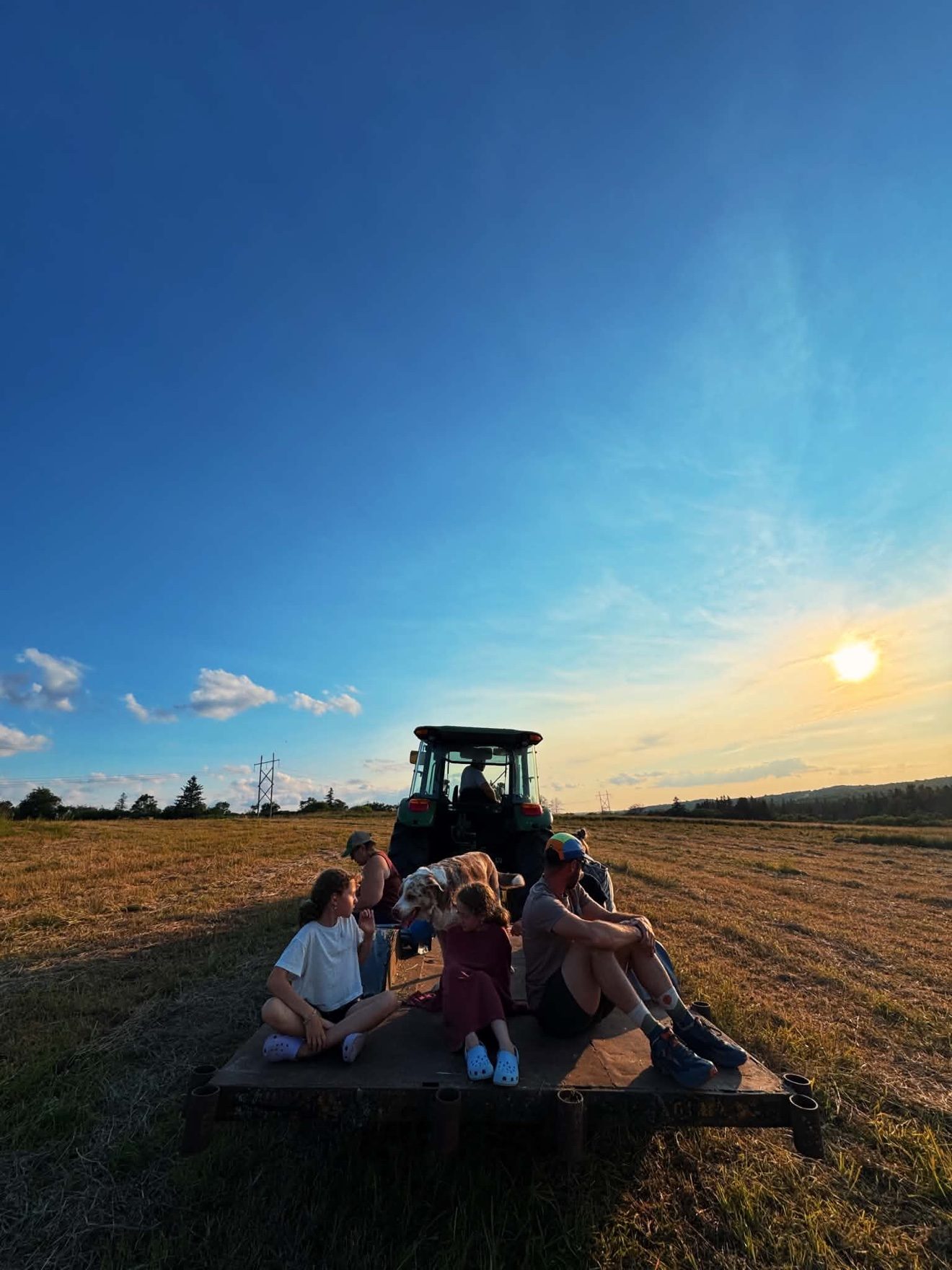
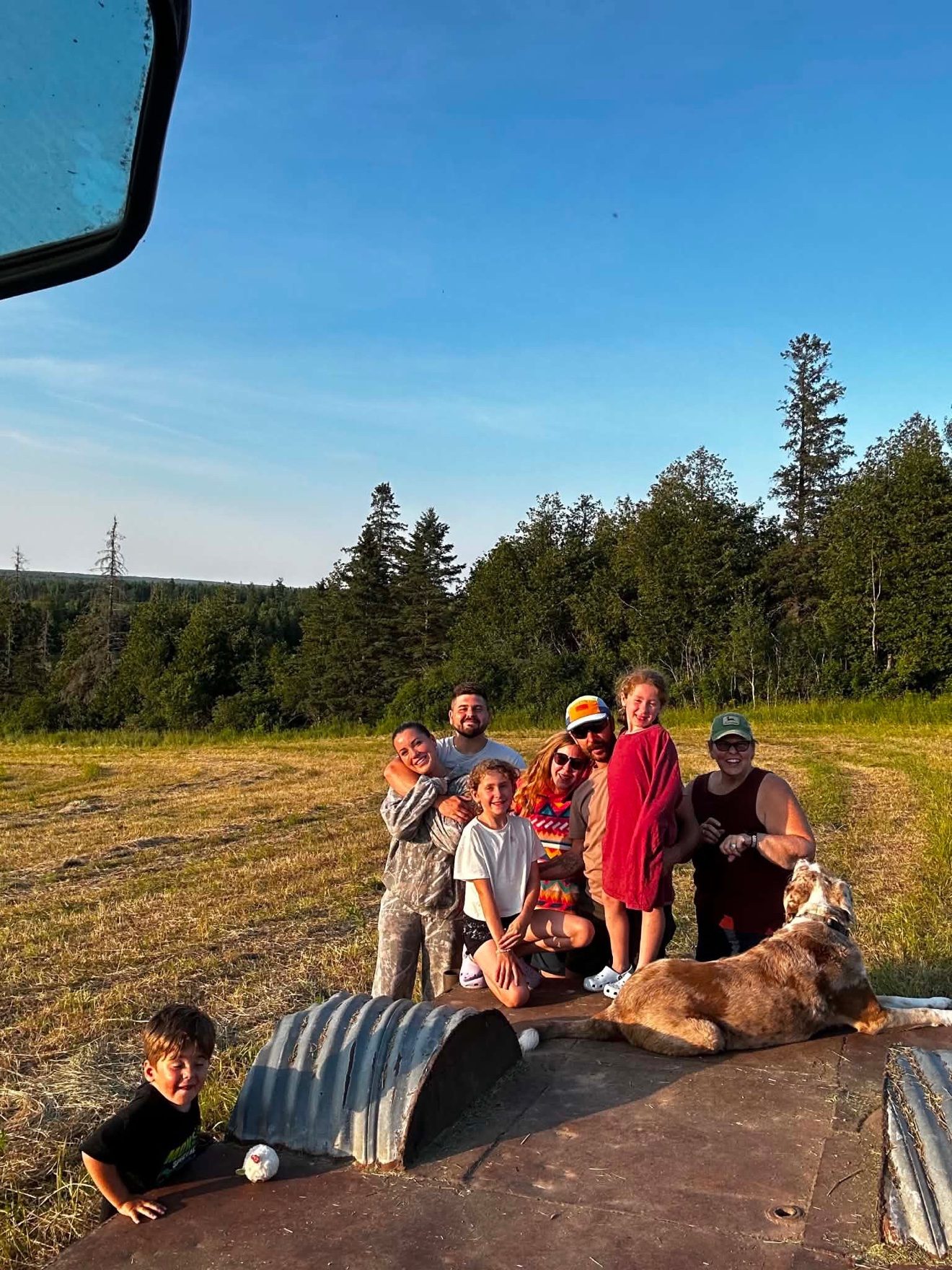
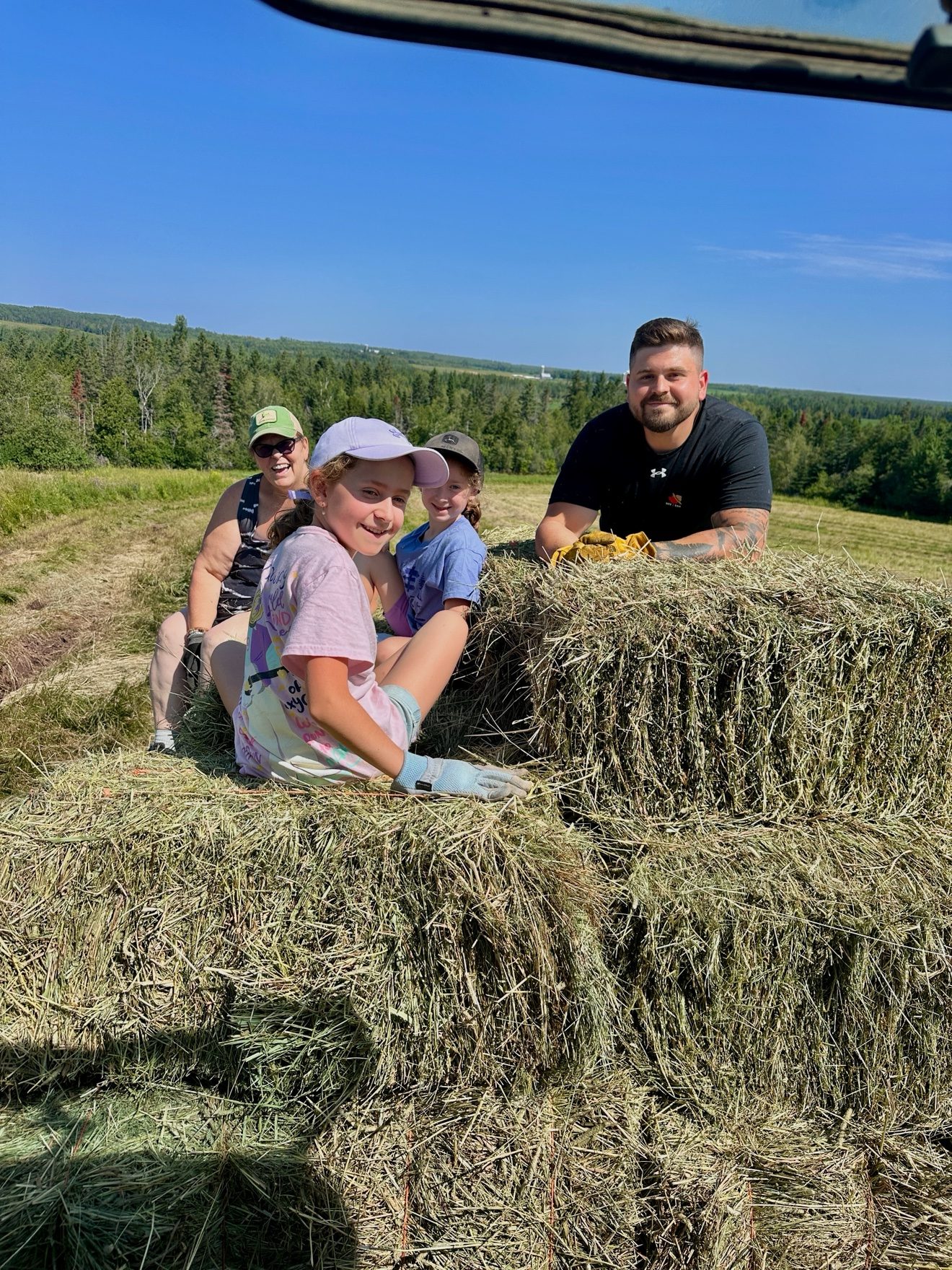
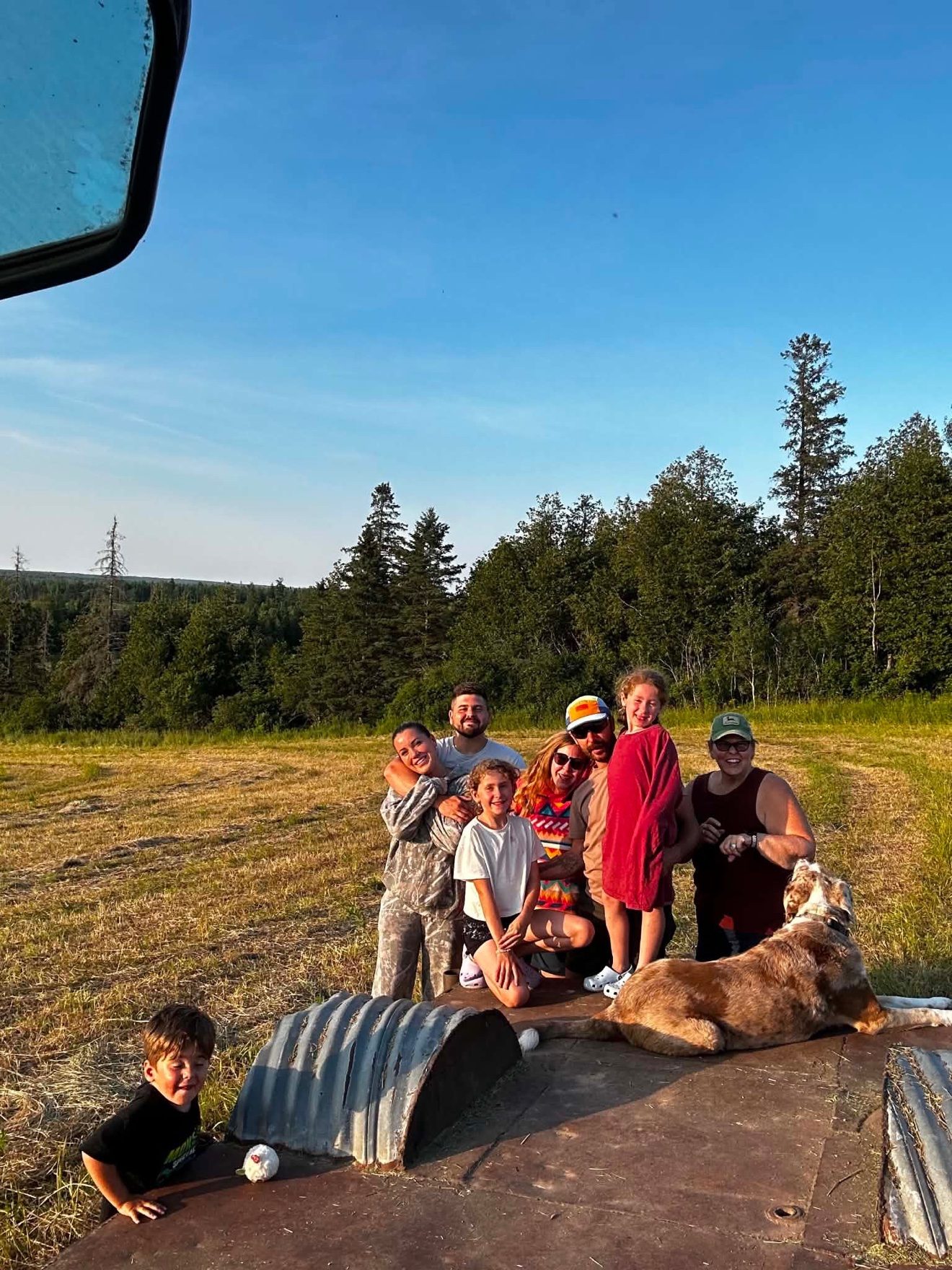
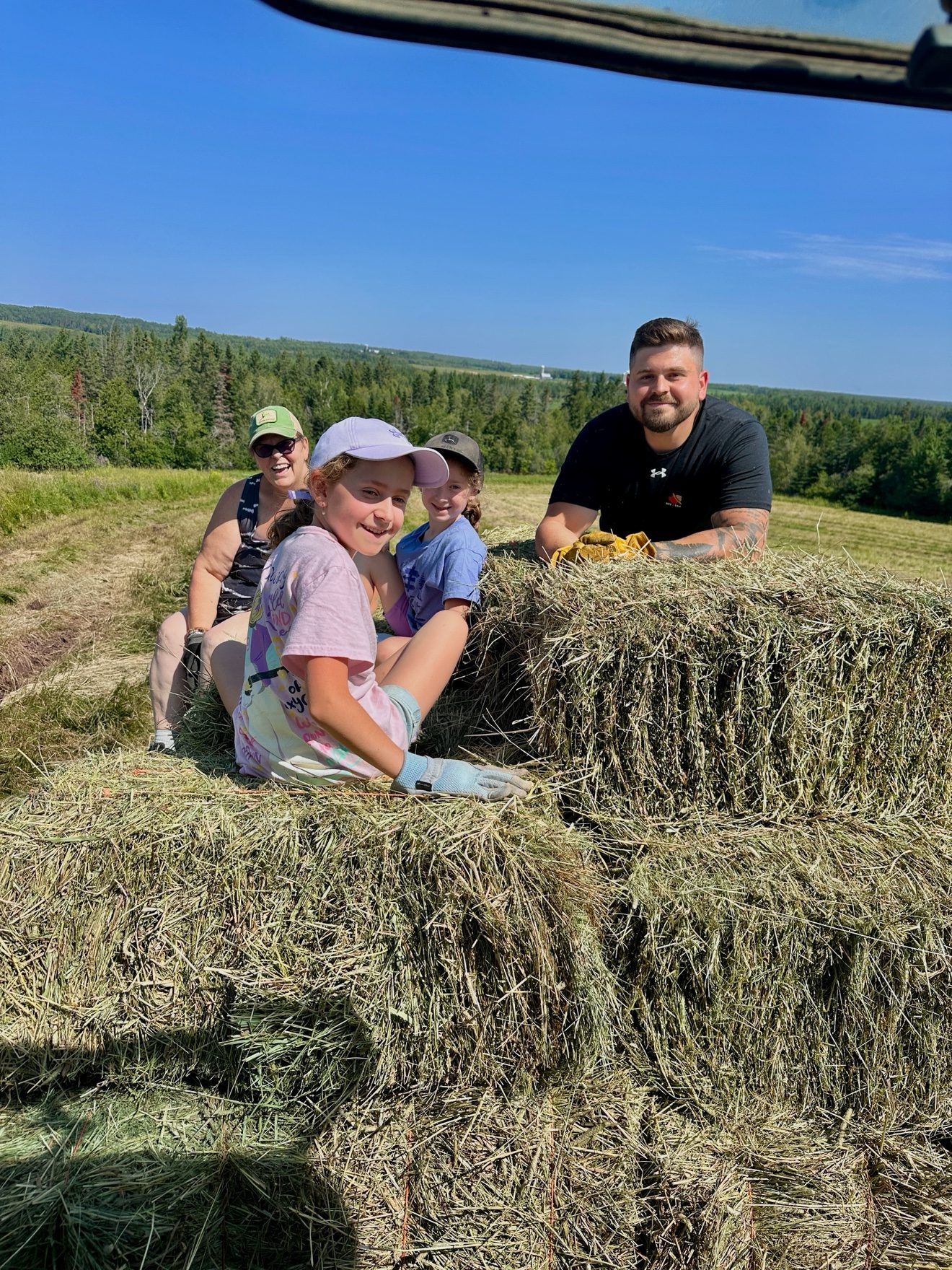
Hay day is a family affair here — many hands on the bales, the whole crew on the trailer, and the dog stretched out in front for the ride home.

Old Equipment, Still Earning Its Keep

The machines that make the hay

No new machinery here — our hay is made with old equipment that still gets the job done, season after season:

Gehl 2170

Our hay mower — it cuts the hay fields when the grass is ready.

Massey Ferguson #10

Our baler — it packs the cut, cured hay into the bales we put up for winter.

John Deere 5085E

Our tractor — it runs the mower and the baler, and hauls the loaded trailer home.